|
|
This topic comprises 4 pages: 1 2 3 4
|
|
Author
|
Topic: 2001: A Space Odyssey DCP
|
Marcel Birgelen
Film God
Posts: 3357
From: Maastricht, Limburg, Netherlands
Registered: Feb 2012
|
 posted 05-30-2017 05:14 AM


Since most of those studios see providing the movie itself as a nuisance and just want to cash in on their licensing fees, maybe they should be helped in achieving their goals and let the people that still do care about the actual product do the work. It almost sounds like a win-win situation.
Most faded prints can be digitally restored, as long as the fading hasn't reached a certain level. You need a good reference of the original colors though.
You could use the DVD or Blu-Ray release as a reference, although you would need somebody with knowledge of the picture to confirm those colors are pretty accurate. Still, there will be a color gamut mismatch between film and those consumer releases.
The Cintel won't be able to read the mag tracks, unfortunately. Maybe someone with a working 35mm mag setup could help to extract those tracks, but it sounds like a pretty long shot to me. So the sound has to be sourced from somewhere else. Also, you really would want to get as close to the original six-track stereo mix as possible.
quote: Leo Enticknap
The lack of anything better in circulation, and the fact that none of the 70mm prints made for the (year) 2001 rerelease are now easily available was essentially the reason why we paid $20k to have our own print made.
Just out of curiosity, what was the source of your 70mm print?
| IP: Logged
|
|
Leo Enticknap
Film God

Posts: 7474
From: Loma Linda, CA
Registered: Jul 2000
|
posted 05-30-2017 09:00 AM

quote: Marcel Birgelen
So, let's presume I could provide a proper 35mm film scanner in mainland Europe, is there anyone who could provide a good 35mm copy and would be willing to ship it?
Scanning a release print on projection stock (2383 or 93) never produces a very good result. The contrast in a release print is too high for the CCD to "see" all the detail in the midtones. A few kW of xenon bulb will force a lot more detail out of the print than a few watts of LED! That is why scans either for preservation/restoration, or to create digital viewing copies, are done from the camera negative, or failing that, the closest generation of low contrast, fine grain intermediate element that survives and is available.
There used to be low contrast positive stocks deliberately designed to make "taping prints" on, of which Kodak 2395 was the last.
You do occasionally see both photochemical and digital restorations and access copies made using release prints as the source element, but that's only because nothing better was available. The result is usually crushed gamma and midtones, e.g. no lapel line visible on black suits, that sort of thing.
I believe our print came from the IN that was used to make the prints for the (year) 2001 rerelease. Some work was done on it then, mainly light valve adjustments to correct dye fading, but it wasn't a full scale restoration (with the result that negative scratches and dirt are visible in some scenes, notably the psycho freakout reel, which had lots of analog SFX involving multiple printing passes in it). The audio is DTS, obviously.
quote: Frank Angel
It just amazes me that this is what film lovers would be willing to do to be able to show a classic to a decree of quality that it deserves, yet the copyright owners, for which they fight tooth and nail to retain, couldn't care less...
I have a hunch that this is not what is going on with 2001. If we were talking about some pretentious 1960s, b/w 1.66 French art movie, that the critics and academics all raved about but no-one else ever saw or ever will see, in which a woman with a beehive hair-do sits drinking vodka and smokes for four hours, moaning about how nasty her boyfriend and life in general is (with Miles Davis playing in the background), and then slits her wrists at the end of reel 13, I would agree with you: that's never going to get a full scale restoration unless one of the big non-profit archives does it, probably with a chunky donation from some celeb looking for a juicy tax writeoff and his or her name added to the opening credits.
But 2001? The major studios have written seven-figure checks to restore movies with that level of enduring public popularity in the past. That's one of the many reasons why this DCP remaining in circulation makes so little sense. If I had to guess, I'd guess that they're contemplating doing an Oklahoma or Vertigo-scale job on it - 8K scanning, the entire workforce of a top end post house slaving away at frame-by-frame manual dustbusting, etc. etc. - but something is preventing the final green light, such as a rights issue, a bit of missing footage they keep hoping to find, maybe, and the DCP in circulation now is basically a placeholder, to service existing demand.
If it's commercially viable to produce the DCP of Hello Dolly we have now, I can't believe that it isn't to do one of 2001: ASO to an equivalent technical standard.
| IP: Logged
|
|
|
|
|
|
Marcel Birgelen
Film God
Posts: 3357
From: Maastricht, Limburg, Netherlands
Registered: Feb 2012
|
posted 05-30-2017 01:18 PM
quote: Leo Enticknap
Scanning a release print on projection stock (2383 or 93) never produces a very good result. The contrast in a release print is too high for the CCD to "see" all the detail in the midtones. A few kW of xenon bulb will force a lot more detail out of the print than a few watts of LED! That is why scans either for preservation/restoration, or to create digital viewing copies, are done from the camera negative, or failing that, the closest generation of low contrast, fine grain intermediate element that survives and is available.
I agree, there are far more desirable sources than a release print, but those aren't really accessible to most of us mortal souls. No studio would give you access an internegative (probably still not really the best source material for a digital scan) let alone any interpositives.
The BMD scanner does have a Bayered CMOS, rather than a 3CCD sensor. It's also not liquid cooled, but if you scan a release print in slow speed, most details will be captured, although it might take some efforts to correctly color grade your scan, once you start to digitally "push the contrast". But to be honest, I'm pretty impressed what can be done with a BMD Cintel and DaVinci Resolve, especially since the thing costs "only" as much as a decent car and not as much as a house. I think it will certainly outperform all current digital releases available. Still, you'll need some good reference material and preferably someone who knows how it's supposed to look.
I guess creating our own DCP of this absolute classic remains a long shot, but maybe Frank can just politely inquire regarding the 35mm print he knows about. Don't feel obliged to do so though, it's more like a spontaneous idea, obviously.
quote: Leo Enticknap
I believe our print came from the IN that was used to make the prints for the (year) 2001 rerelease. Some work was done on it then, mainly light valve adjustments to correct dye fading, but it wasn't a full scale restoration (with the result that negative scratches and dirt are visible in some scenes, notably the psycho freakout reel, which had lots of analog SFX involving multiple printing passes in it). The audio is DTS, obviously.
Also don't feel obliged to anything, but do you know the sound mix on the (year) 2001 dual-DVD release? And would you be able to somewhat objectively compare it to your theatrical DTS version?
| IP: Logged
|
|
|
|
|
|
|
|
Leo Enticknap
Film God
Posts: 7474
From: Loma Linda, CA
Registered: Jul 2000
|
posted 05-31-2017 02:40 PM
Once you know the figures involved in building and maintaining a temperature and humidity-controlled film archive vault, $300 strikes me as entirely reasonable. That figure is also completely in line with what the rest of the world's big nonprofit archives would charge for a print loan (excluding shipping and clearance). However, I agree that it's a major financial obstacle for a venue that wants to play the print.
quote: Marcel Birgelen
Also don't feel obliged to anything, but do you know the sound mix on the (year) 2001 dual-DVD release? And would you be able to somewhat objectively compare it to your theatrical DTS version?
I'm afraid I don't: I have the 2007 or 2008 BD, but not any DVD version.
Any objective comparison would be very difficult, because there are so many variables involved, including:
- The type of audio encoding on the DVD (LPCM, AC3, consumer DTS, etc.), vs. theatrical DTS
- The audio bitrate on the DVD vs. the theatrical DTS
- The quality of the decoder and digital-to-analog converters in use for both types of playback
- Power amps and speakers
Playing the DVD in the same theater as the 70mm print would at least give you a commonality in the power amps and speakers, but I bet that you'd hear a difference between the DVD played through a $29.99 no-name player on Ebay and one hooked through a hi-fi DAC costing silly money, for example.
| IP: Logged
|
|
|
|
Marcel Birgelen
Film God
Posts: 3357
From: Maastricht, Limburg, Netherlands
Registered: Feb 2012
|
posted 06-01-2017 06:20 PM
Thanks to you, I'm not that sure anymore. ![[Wink]](wink.gif)
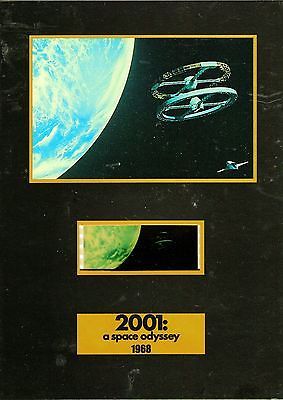
I will try to get it out of the box it's currently stored in. Does yours also come with an actual film frame stuck in the front or back cover of the jewel case?
quote: Leo Enticknap
I'm afraid I don't: I have the 2007 or 2008 BD, but not any DVD version.
Any objective comparison would be very difficult, because there are so many variables involved, including:
- The type of audio encoding on the DVD (LPCM, AC3, consumer DTS, etc.), vs. theatrical DTS
- The audio bitrate on the DVD vs. the theatrical DTS
- The quality of the decoder and digital-to-analog converters in use for both types of playback
- Power amps and speakers
Playing the DVD in the same theater as the 70mm print would at least give you a commonality in the power amps and speakers, but I bet that you'd hear a difference between the DVD played through a $29.99 no-name player on Ebay and one hooked through a hi-fi DAC costing silly money, for example.
Yeah, I'm aware of those things, I understand it's somewhat of a long shot and not extremely objective.
But I was just trying to get an idea where the sound tracks available on the consumer releases came from. I guess the DTS mix accompanying your 70mm copy and the (year) 2001 DVD release had the same origin, at least that would make sense to me. When you "restore" a movie and re-release it both in home consumer markets and in cinemas, I don't expect you to use different sources. Maybe they might "near field mix" those movies for the consumer release, but I doubt they would've done anything like that for this particular release.
I just played back part of my RIP (from the DVD, now located in storage) and there is no DTS track on there, just an AC3 track. On the positive side though, a consumer AC3 track has a higher bitrate than a theatrical one.
| IP: Logged
|
|
|
|
|
|
|
|
|
|
|
|
All times are Central (GMT -6:00)
|
This topic comprises 4 pages: 1 2 3 4
|
Powered by Infopop Corporation
UBB.classicTM
6.3.1.2
The Film-Tech Forums are designed for various members related to the cinema industry to express their opinions, viewpoints and testimonials on various products, services and events based upon speculation, personal knowledge and factual information through use, therefore all views represented here allow no liability upon the publishers of this web site and the owners of said views assume no liability for any ill will resulting from these postings. The posts made here are for educational as well as entertainment purposes and as such anyone viewing this portion of the website must accept these views as statements of the author of that opinion
and agrees to release the authors from any and all liability.
|

 Home
Home





![[beer]](graemlins/beer.gif)


![[Frown]](frown.gif)




 Printer-friendly view of this topic