|
|
This topic comprises 4 pages: 1 2 3 4
|
|
Author
|
Topic: Cinema Sound Processor in Media Block?
|
|
|
|
|
|
|
David Buckley
Jedi Master Film Handler
Posts: 525
From: Oxford, N. Canterbury, New Zealand
Registered: Aug 2004
|
 posted 02-20-2016 04:43 PM


I'm going to go against the grain here, and say why wouldn't you do this?
An IMB is a special-purpose computer doing digital signal processing. If the IMB dies, the show is over. So the IMB is absolutely critical to the show.
The sound processor (a modern sound processor!) is also a special-purpose computer doing digital signal processing. If it dies, then really, a show without sound is not a show, so it too is critical to show operation.
Because these two things are effectively in series, and both are critical, then the possibility of a lost show multiplies by the failure rate of the two components. In addition to the two critical failure points, there is also a bunch of circuitry involved in transporting the AES streams from the IMB to the processor, which can also fail.
Since there are two boxes doing the same thing (digital signal processing) putting the audio DSP routines on the IMBs processing resources makes the overall system more reliable, as there is only one critical device whereas before there were two, and all the intervening gubbins is lost.
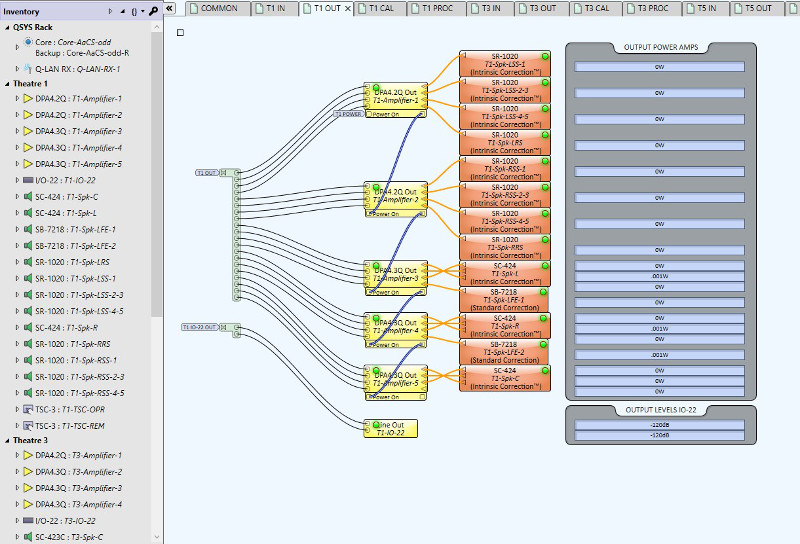
The next thing to do is to use an Ethernet based audio protocol, to get the audio out of the IMB over dual-path redundant Ethernet, and have each amplifier get its audio over the Ethernet. Today that might use the Dante protocol, but tomorrow it would probably be AES67.
Going digital audio to the amplifiers over a redundant Ethernet path gets rid of a truckload of single points of failure, and will again tend to make the overall system more reliable.
The only downside to audio-in-the-IMB is that today's processors are a nice place to plug in non-sync and alternative content. So compared to today's IMBs, the IMB might need to sprout a couple of RCA jacks for the non-sync, extract embedded audio out of HDMI, and perhaps more sensibly, allow AES67 audio inputs.
| IP: Logged
|
|
|
|
|
|
|
|
|
|
|
|
|
|
|
|
|
|
|
|
|
|
Marcel Birgelen
Film God
Posts: 3357
From: Maastricht, Limburg, Netherlands
Registered: Feb 2012
|
posted 03-03-2016 12:28 AM
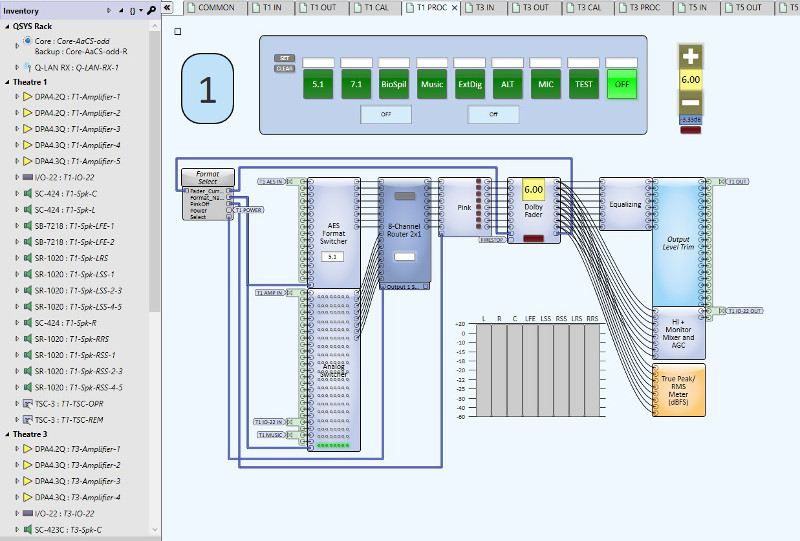
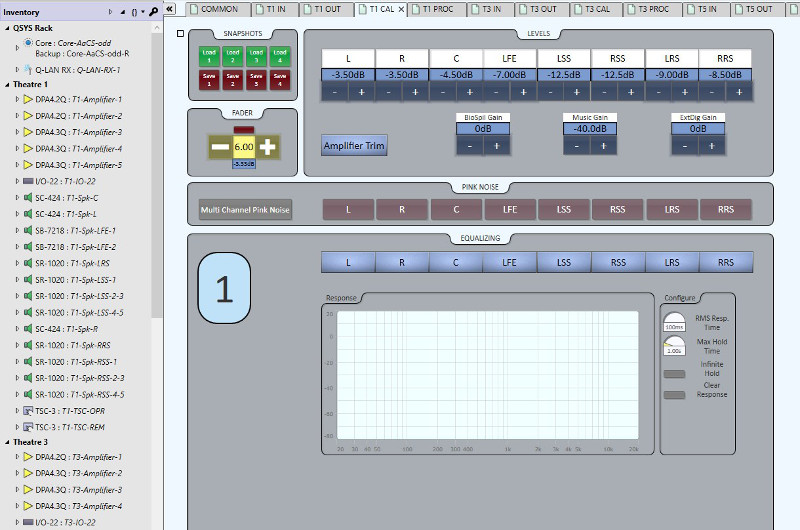
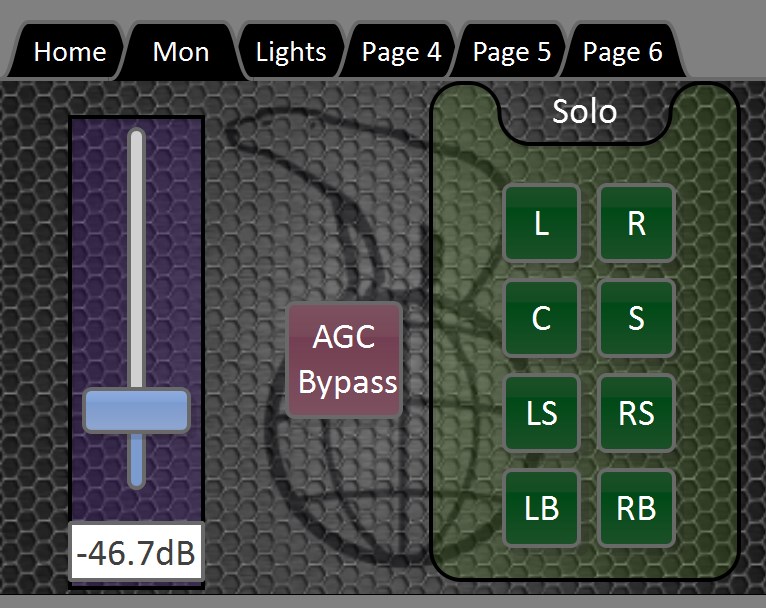
Q-Sys is a great system with great potential. I think it would be great if QSC would open up the platform a little so third parties could build extensions for it. In that case, somebody could develop a matrix decoder which could be loaded into your Core. Right now, to achieve this you would have to hook up an analog device which takes a whole bunch of analog inputs and outputs.
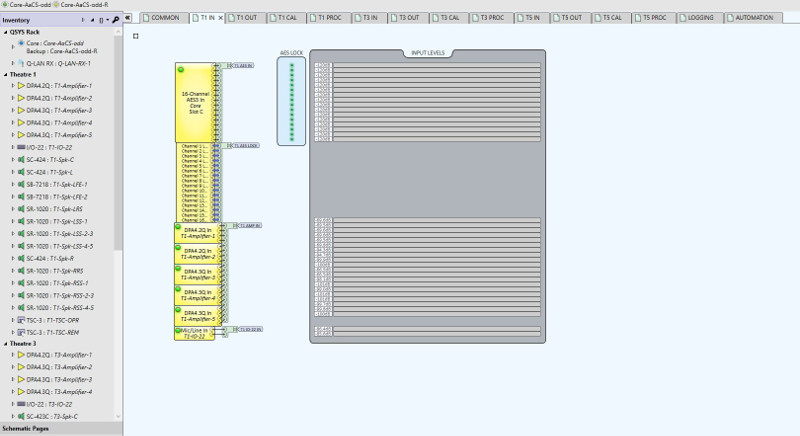
For multi-theater setups, in order to achieve some kind of fail-over redundancy in the core setup, it would really help if you could replace the discrete AES signals with AES67 or CobraNet, so you could route that part over Ethernet.
Obviously, you're introducing new SPOFs here. Although it's quite trivial to create a redundant Ethernet network, it's not like they cannot fail. A single misbehaving or misconfigured switch can bring down your network in an instant, despite all the redundancy and throw all your rooms into silence.
| IP: Logged
|
|
|
|
All times are Central (GMT -6:00)
|
This topic comprises 4 pages: 1 2 3 4
|
Powered by Infopop Corporation
UBB.classicTM
6.3.1.2
The Film-Tech Forums are designed for various members related to the cinema industry to express their opinions, viewpoints and testimonials on various products, services and events based upon speculation, personal knowledge and factual information through use, therefore all views represented here allow no liability upon the publishers of this web site and the owners of said views assume no liability for any ill will resulting from these postings. The posts made here are for educational as well as entertainment purposes and as such anyone viewing this portion of the website must accept these views as statements of the author of that opinion
and agrees to release the authors from any and all liability.
|

 Home
Home



![[Smile]](smile.gif)
![[Big Grin]](biggrin.gif)

![[Wink]](wink.gif)



 Printer-friendly view of this topic