|
|
This topic comprises 4 pages: 1 2 3 4
|
|
Author
|
Topic: Abandoned Theaters
|
|
|
|
|
|
|
Timothy Ervin
Film Handler

Posts: 84
From: Oklahoma
Registered: Jan 2001
|
 posted 03-15-2005 11:34 PM


I thought I was the only theatre person that loved getting inside and exploring old abandon theatres. I have been in several and have found some nice mementos (old tickets, box office reports, old film). The coolest one I have been in, has to be the Roxy in Muskogee, Oklahoma. It was in the mid 80's and I was just a kid. The theatre had sat abandon for years. The theatre was one of the oldies, with a balcony. A neon sign that read "Sweet Shop" hung over the concession area, There were old one sheets everywhere, one of the one sheets was "Pippi Longstocking", I found rolls of old tickets, film reports and a box of 3-D glasses! The projection room still had the projectors and there were pieces of old film everywhere! I took a roll of tickets and a few of the 3-D glasses. Looking back now , I wish I would have taken a few more souviners.
The scariest theatre adventure I had was in Oklahoma City, inside the old Continental. The windows in the front had been knocked out so access was easy. The theatre was stripped, but I did find a ticket stub for "Moonraker" and a flyer for "Oklahoma" presented in 'Cinemascope'. While I was looking around in the auditorium I heard someone running and seen a man running down from what I presumed was the booth and out the door. I later found out that the theatre had been home to gang members. I went back a few weeks later, this time with a friend. We ventured up into the booth and seen where the gang members had spray painted graffiti crap all over the place. there were also peep holes made in the walls so they could see who was coming and going. We also found several loose gun shells and decided to get the hell out of dodge.
But, that did not stop me from exploring old theatres and drive ins. I still do it from time to time and wish I had another theatre buddy to explore these wonderful buildings with. Whenever I start finding myself burned out, I usually pack my back pack, grab the camera and hit the road in search of an old theatre waiting to be explored.
The last theatre I explored was one in a small town in the Texas panhandle. the building was in such bad shape that the back wall of the theatre had collapsed. the wooden chairs were still there and only a small piece of white screen was left hanging on a wooden beam. The projection equipment was still there as were old pieces of film and paperwork. It was in the summer and was incredibly hot so I did not get to explore as much as I wanted to.
If you are going to hit the road in search of old theatres to explore, better take a back pack with your supplies (bottled water. gloves, cameras, notebooks and a cell phone). I have found exploring old theatres is very exciting and fun!
| IP: Logged
|
|
|
|
|
|
Richard C. Wolfe
Master Film Handler

Posts: 250
From: Northampton, PA, USA
Registered: Apr 2000
|
posted 03-17-2005 11:09 PM

Wayne,
It's been about 10 years since I was last in Richmond, but it seems to me that the Booker-T had been completely restored on the inside, and was being used as a playhouse. The small theatre next door called the Little, and at one time the Maggie Walker, had been incorporated into the complex by using it's entrance, marquee and lobby as the entrance for the former Booker-T. The Littles auditorium was being used as a black box theatre.
It must have been some years earlier that you had looked at the Booker-T before the restoration... OR, am I confused and have this mistaken for another theatre?
Also while on the topic of Richmond theatres, what is the statis of the Westhampton? That was a really nice single screen theatre in colonial style. Another theatre I saw sitting closed back then was the Capitol, not too far from the Byrd. What ever happened to that one?
Someone had made a comment earlier about the fact that there can't be very many abandoned old theatres from the 20s and 30s still around. On the contrary, there are lots of them all throughout Pennsylvania, and I'm sure the rest of the country can't be all that different. I've found dozens of them rotting away throughout Philadelphia, but most of them are scattered throughout the state in smaller communities.
| IP: Logged
|
|
Wayne Keyser
Master Film Handler
Posts: 272
From: Arlington, Virginia, USA
Registered: May 2004
|
posted 03-18-2005 10:48 PM
Richard - It was definitely the Booker T - I'm talking about 1971 or 72, so it was WAY before any restoration.
I dunno about the current status of houses in Richmond - hsven't been back in years. The Westhampton was a pleasant, nice-size theater - the closest to campus (walkable), but always showing VASTLY extended runs of roadshows like DOCTOR ZHIVAGO and the like. But it was easy to bus downtown to the several downtown houses for dollar matinees.
And then there was the Byrd (still running, I understand) with Eddie Whatsisname at the organ for pre-show singalongs nightly - talk about showmanship, with his white brocade tux jacket, the blindingly bright white spotlight on the organ as it rose from the pit, the many effects (harp over there, piano over here, drums and bird-whistle who knows where) and the follow-the-bouncing-ball lyrics ... how can you beat it? Ha! Take THAT, Imax! Die, Showscan! ... (oh, that's right, Showscan already died).
| IP: Logged
|
|
|
|
Bill Enos
Film God

Posts: 2081
From: Richmond, Virginia, USA
Registered: Apr 2000
|
posted 03-21-2005 08:53 AM
Old Richmond Theatres. The Booker T opened in 1915 as the Strand. It was a vaudeville house with movies, seated 1050. It has two balconies th upper which is small and very steep and is no longer in use. It closed in 1927 after a fire and reopened in 1934 as the Booker T. The facade of the building is much altered but the interior is pretty much restored. It is now owned and operated by a local theater group, Theater Four. Next to it is the Regent which opened in 1936 as a movie house, it seats 330. The lobbies of the Regent and Empire are now connected.
The Westhampton is now a Regal house and is the primary outlet for foreign and art films in the area. Built with a small screen even for the period, when scope and 70mm began the entire front of the auditorium was cut off and rebuilt to accommodate wide screen. The project was done so well that the change is undetectable inside. Outside the area where the building was cut is quite noticable, It is very well preserved much to the credit of the original owners and Regal.
The Loews, now the Carpenter Center For the Performing Arts was painter red and white thru out in the '70s by the Loews company. It was repainted in the middle '80s in a rather hideous attempt to restore the interior. It was done in a brownish cream and then sponge painted with nasty greens and maroons then the whole mess was gloss coated---VERY glossy, the whole auditorium shines. The interior decor was done by an architect, not a decorator. Typical I guess of what to expect when an engineer does decorating. He thinks he did it perfectly. The theatre is now closed undergoing yet another renovation. The building is being cut off at the proscenium to double the size of the stage and fly space and storage. It is scheduled to reopen in 18 to 24 months.
Eddie Weaver had a long career in Richmond. He started at the Loews in 1937 and moved to the Byrd in 1960 where he continued until 1983 when gave up playing 6 nights a week after nearly 50 years. He attended the Eastman School of Music originally to study violin. He switched to organ and the rest is history. Eddie died in February of 2002 at 92. He played piano with his daughter Jodie (quite a pianist too) in a small event in early December '99.
The 70mm house was probably the Broad Street Cinema. It had a huge screen, nearly floor to ceiling and wall to wall. Really spectacular. It had Cinnemechanicca 35/70s. The build is now gone for about 12 years.
| IP: Logged
|
|
|
|
William Hooper
Phenomenal Film Handler
Posts: 1879
From: Mobile, AL USA
Registered: Jun 99
|
posted 03-22-2005 03:16 AM
quote: Bill Enos
The Booker T opened in 1915 as the Strand. It was a vaudeville house with movies, seated 1050. It has two balconies th upper which is small and very steep and is no longer in use.
You'll probably find that it was the "Colored Gallery" & had its own, separate entrance from the street. Awful as segregated seating was, the neglect is what makes that section the one to check out: you'll often find the most original material up there: carpet, seats, etc. because they never had enough consideration for the black patrons to maintain or renovate the area of the auditorium where they sat.
A "Colored Gallery" is a very 'teens & before design of segregated seating, although some later theaters that were of old-fashioned design had them. Afterwards, it was usually just a design of the balcony to make traffic between the upper balcony "colored section" & lower balcony. In large cities with very large black populations, there would sometimes be a full-size 3rd balcony that was exclusively the "colored section".
Segregated audiences, Colored Sections & Colored Entrances were pretty much fixtures all over the US, not just in the south: all over there were theaters where black people weren't allowed ("They don't come over this side of xxxxx street"), & segregated entrances & seating in the northeast, midwest (Klan country too, in OK, MO, etc), & west (someone not too long ago mentioned the now-unused Colored Balcony at the Palace Theatre in Los Angeles). You'll easily find them in older, larger houses (often the segregated entrances are converted to additional exits or closed up because they were non-code-conforming: 3-to-4 floor closed, nonstop deathtrap stairwells); & small postwar houses had them too (small balconies with a separate entrance, you recognize that door off the main entrance very quickly on the storefront theaters).
I've always been very interested in that theatre segregation outside of the US states - how could it work, anyway?. In the SE before the Civil Rights Act, racial segregation was the law: regulations required that if a place of public assembly admitted black people, that they must have a separate, non-communicating seating area (& later a separate entrance, & more & more tacked on through the years as lawmakers found additional ways to segregate). But I've never really been able to get a handle on Jim Crow: where there were no racial segregation laws, why couldn't black folks just walk up to the ticket booth, say "Give me a ticket down front", then take them to court if they didn't get one? Was the problem that it was all handled locally, the local judge would just say "Well, they've got a separate entrance, you have to use that." With no basis in law? No appeals?
quote: Bill Enos
The Loews, now the Carpenter Center For the Performing Arts was painter red and white thru out in the '70s by the Loews company. It was repainted in the middle '80s in a rather hideous attempt to restore the interior. It was done in a brownish cream and then sponge painted with nasty greens and maroons then the whole mess was gloss coated---VERY glossy, the whole auditorium shines.
Since you're at the Byrd, you'll quickly understand one of my pet peeves about some meticulous restorations: they'll have folks come in, chemically analyze layers of the original paints to get the original colors, paint everything back, open the house & say "Here it is, it looks exactly like it did when it opened!" And of course it doesn't by a long shot, because they've changed the colored lighting to all white & so the colors are all wrong. Any set designer or high school science teacher will tell you that something's color is not determined by just its pigmentation, but also by the color of the light on it. Together they determine the color of light reflected to the eye. The original lighting systems never were all white, & red paint with blue or yellow light on it is not the color of the red paint, etc. Nobody ever made 20s movie palace interiors to be seen the way they usually are now; they're skeletons of the original colors in white light.
quote: Bill Enos
The theatre is now closed undergoing yet another renovation. The building is being cut off at the proscenium to double the size of the stage and fly space and storage.
That's become quite a fashion, demolishing the stage house (i.e., everything behind the proscenium, includes stage, fly tower, dressing rooms, some mechanical, etc.) & building a newer, larger one. As a functional renovation, it doesn't bother me much. Large houses turned PAC's typically need to accommodate large shows, which are larger than they were in the 20s. There's less to catastrophically screw up technically by an architect messing around with theaters renovating there than on the other side of the proscenium, too. Still, I really do enjoy crawling around old stage houses.
| IP: Logged
|
|
Wayne Keyser
Master Film Handler
Posts: 272
From: Arlington, Virginia, USA
Registered: May 2004
|
posted 03-22-2005 09:59 PM
quote: William Hooper
But I've never really been able to get a handle on Jim Crow: where there were no racial segregation laws, why couldn't black folks just walk up to the ticket booth, say "Give me a ticket down front", then take them to court if they didn't get one? Was the problem that it was all handled locally, the local judge would just say "Well, they've got a separate entrance, you have to use that." With no basis in law? No appeals?
[Putting on my best Southern accent and spouting arguments remembered from - really - not all that long ago]
And you are from the South? Jeeez! Maybe you're one of those folks who just got here from "up North" and come down here wanting to stir up a little trouble.
Now look here, mister ... I got no problem with your average colored, I work around 'em every day. But that doesn't mean I got to have 'em over at my house to dinner, or sittin' down in the main part of the movie where they don't belong. And they know better than to come where they aren't wanted. Any one of 'em tried a thing like that, there wouldn't be a white man in the audience wouldn't set 'em straight, and if anybody called the cops ... well, the Sheriff is a good old boy and he knows a few ways to talk sense to these outside agitators. And the report would show that he had a knife and was just asking for a little "plain talk" from the upstanding men of the town.
But we don't have problems like that here ... didn't nobody pay good money to come to the picture show just to raise a ruckus. They have their place and we have ours and we all get along just fine. Now if you know what's good for you, you won't let people hear you stirrin' up trouble.
---------------
The arguments were powerful when, after a hard day at work, everybody just wanted to see a movie and go home.
| IP: Logged
|
|
|
|
William Hooper
Phenomenal Film Handler
Posts: 1879
From: Mobile, AL USA
Registered: Jun 99
|
posted 03-23-2005 04:00 AM
quote: Wayne Keyser
Putting on my best Southern accent and spouting arguments remembered from - really - not all that long ago]
Well, I meant my baffling problem was Jim Crow laws outside the south (where segregation was institutionalized at the state level). Jim Crow laws originally just gave the proprietors of places of public accommodation the legal right to exclude people by race. "Jim Crow" just was a broad categorical description of laws that were based from that. Jim Crow laws were scattered all over the US, but they were very localized. Most perplexing are segregated theaters where it would seem no Jim Crow laws existed, but folks followed the signs, anyway.
quote: Bill Enos
As it originally operated the Strand did not admit "persons of color" at all which pretty much the policy at all the whites only theatres in Richmond. Blacks who attenpted to buy tickets at the Byrd were given cab fare to the blacks only theatre of their choice as well as the admission price
That would adhere to the twisted but wildly inaccurate sort of idea of "separate but equal" accommodation that after Plessy v. Ferguson was a requirement for legal racial segregation in places of public accommodation. The idea that probably was put forth is that a movie is a movie, a theatre is a theatre, a seat is a seat.
There's an interesting book by Janna Jones, _The Southern Movie Palace: Rise, Fall, and Resurrection_, which bites off a lot about a big subject. To avoid being too superficial since the topics are so broad, she just focuses on 4 or so theaters: the Carolina in Durham, the Tampa in Tampa, The Alabama in Birmingham, & the Fox in Atlanta. It's a sort of social history & a contemporary social examination of current operations & remodels/restorations at those theaters. The restoration parts are a little gronky: she mentions in a chapter about a theater doing what it can with limited resources that old photos of the theater are in black & white, requiring some leeway & supposition in color selection, after a previous section about experts coming in to analyze the layers of paint & determine the correct colors in another theater, etc. There's a lot of interesting information about segregation practices, effects, attitudes, etc. at those theaters, & one of the *most* interesting parts is a description of some events at a meeting Robert Kennedy called of theatre owners to end segregation in theatres.
quote: Bill Enos
The present re-restoration plans call for all auditorium and lobby paint to be taken back to the original 1928 colors. They have engaged the services of a company that specializes in that type of work. Maybe the outcome will be better this time. The correct colored bulbs will go back too.
WHAT? Why didn't they get the folks running the Mobile Saenger to paint it white for them?
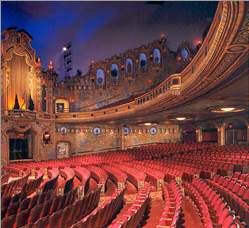
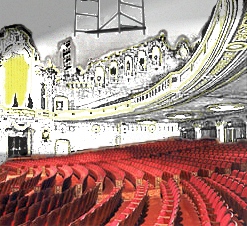
The original architect couldn't have had as much taste as the people who remodeled the Mobile Saenger! And you get two upside-down painter's scaffolds hung from the ceiling, too!
| IP: Logged
|
|
|
|
All times are Central (GMT -6:00)
|
This topic comprises 4 pages: 1 2 3 4
|
Powered by Infopop Corporation
UBB.classicTM
6.3.1.2
The Film-Tech Forums are designed for various members related to the cinema industry to express their opinions, viewpoints and testimonials on various products, services and events based upon speculation, personal knowledge and factual information through use, therefore all views represented here allow no liability upon the publishers of this web site and the owners of said views assume no liability for any ill will resulting from these postings. The posts made here are for educational as well as entertainment purposes and as such anyone viewing this portion of the website must accept these views as statements of the author of that opinion
and agrees to release the authors from any and all liability.
|

 Home
Home







 Printer-friendly view of this topic