 |
|
 Home
Products
Store
Forum
Warehouse
Contact Us Home
Products
Store
Forum
Warehouse
Contact Us
|
|
|
|
This topic comprises 4 pages: 1 2 3 4
|
|
Author
|
Topic: Need info on snow chains/cables
|
Paul Mayer
Oh get out of it Melvin, before it pulls you under!

Posts: 3836
From: Albuquerque, NM
Registered: Feb 2000
|
 posted 02-03-2011 02:16 PM


From my limited experience in snow, aircraft stop fairly well - the snow creates a lot of rolling drag so stopping distance isn't affected that much. I tried to land as slow as possible and didn't touch the brakes until it came time to turn off the runway. Also, I didn't try for reverse - the props in beta range (power levers at idle) produce lots of drag. But I was also never in a short runway situation, so I never felt the need to use reverse.
But if there's ice under the snow, things can be quite fun, as my friend found out. No one was hurt, there was no damage, and it was all over so quickly that nobody got all that shook up. Again, I think the general idea is to use the brakes sparingly at first, to verify that there is braking action available and that directional control can be maintained. And if planning on going beyond beta range and into reverse, do so only after verifying that both props are actually in reverse before applying any power.
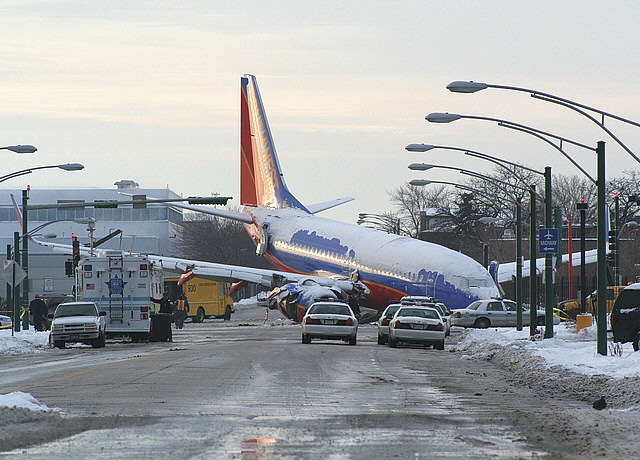
Most aircraft do not have anti-skid since they land at slow enough speeds that hydroplaning is usually not an issue. I'm pretty sure that all transport category jets and at least some turboprops do have anti-skid. Not so sure that anti-skid is all that useful when landing on ice anyway. Anti-skid works by sensing that the wheels have stopped turning while the aircraft is still moving, and releases the brakes to get the wheels to spin again. But if you land in a hydroplaning or icy condition, the wheels may not spin up. In the mean time the anti-skid is holding the brakes off. Another "interesting" situation. Here it is probably best to execute a "firm" landing - drive the wheels solidly into the runway to minimize the chance for hydroplaning to start.
Interestingly, having reverse thrust available is not a factor when calculating landing distance. During FAA certification for an aircraft type, the landing performance chart figures are based on use of brakes only (and proper pilot flying and braking technique of course).
| IP: Logged
|
|
|
|
|
|
|
|
All times are Central (GMT -6:00)
|
This topic comprises 4 pages: 1 2 3 4
|
Powered by Infopop Corporation
UBB.classicTM
6.3.1.2
The Film-Tech Forums are designed for various members related to the cinema industry to express their opinions, viewpoints and testimonials on various products, services and events based upon speculation, personal knowledge and factual information through use, therefore all views represented here allow no liability upon the publishers of this web site and the owners of said views assume no liability for any ill will resulting from these postings. The posts made here are for educational as well as entertainment purposes and as such anyone viewing this portion of the website must accept these views as statements of the author of that opinion
and agrees to release the authors from any and all liability.
|
|
|
|



![[Smile]](smile.gif)



 Printer-friendly view of this topic