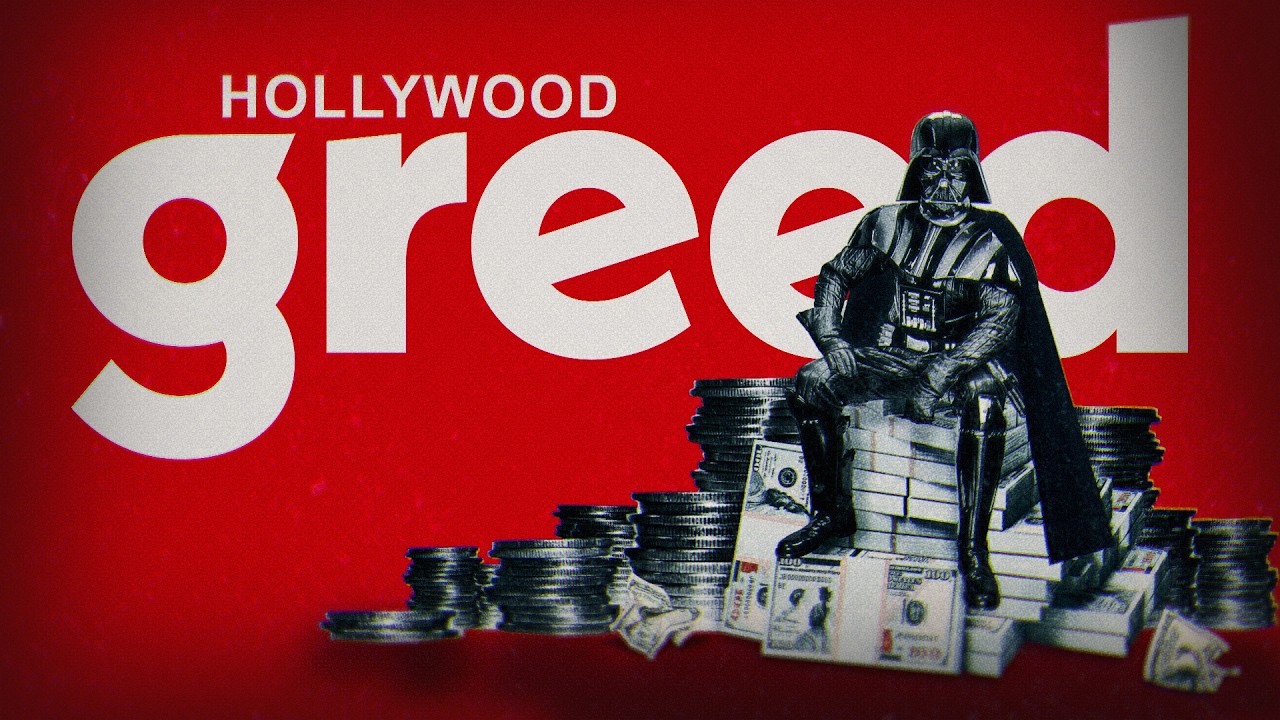
Netflix to buy Warner/Discovery

Collapse
X
 
  • Time
  • Show
Clear All
new posts
  • Bobby Henderson
    Expert Film Handler
    • Jan 2020
    • 926
    • Lawton, Oklahoma

    #61
    Originally posted by Steve Guttag
    It isn't "luck." HBO makes a good show. Those that they buy are good shows.
    I agree HBO deliberately sets a high bar on quality with the original shows it produces. But the point I'm making is that any movie studio or streaming service could try to pursue the quality angle and yet still fail with the shows that it airs. Someone can intend to produce a TV series and make it great, but there is no guarantee it will connect with audiences.

    HBO has had one hell of a winning streak with its original content; that winning streak has been going on for roughly 30 years. I always think of "The Sopranos," but HBO has had so many other series that were big hits too. "Heated Rivalry" is now the latest example. I think part of HBO's success with its original content is due to the chances it takes. So many of their shows influence the cultural zeitgeist.

    And, yeah, I hope HBO and other parts of Warner Brothers aren't ruined in this buy-out of WB/Discovery. I'm kind of rooting for Netflix because I just don't like what Skydance/Paramount have been doing -particularly the shit show they have going on with CBS and its news division. I think they intend to do the same crap with CNN. Netflix intends to spin-off CNN with its buyout deal. Traditional cable TV is arguably a dying platform (the audience demographic is definitely skewing older).

    Do people still "rent" movies on the various digital platforms?
    I don't know. In my own case, I don't. I don't buy digital downloads of movies either. If I buy a movie it will be on Blu-ray disc. But it has been years since I've done that. The habit now is just opening the HBO, Netflix or Prime Video apps and seeing what is available there. Over the past 10 or so years I've missed seeing a lot of movies. If I didn't see the movie in the theater there was an even lesser chance I'd bother watching on a streaming service. I'd just end up forgetting about it.​
    Last edited by Bobby Henderson; 01-24-2026, 10:12 AM.

    Comment

    • Ed Gordon
      Pro Film Handler
      • Jan 2020
      • 365
      • Seattle, WA, USA

      #62
      Here is what Google AI has to say about profitability of streaming services:

      AI Overview

      Currently, Netflix is the clear leader in streaming profitability, consistently reporting strong profits, while Disney (Disney+ & Hulu) and Warner Bros. Discovery (Max & Discovery+) have achieved profitable streaming segments, moving from losses to gains, with Disney swinging to its first full-year profit recently. Other major players like Amazon (Prime Video) and Paramount+ are also showing improved financial health, with Paramount+ achieving profitability, though some services like Peacock are still narrowing losses towards that goal.

      Key Profitable/Improving Streamers:
      • Disney+ & Hulu: Swung to its first full-year streaming profit and continues to see substantial profit growth in its combined streaming segment.
      • Warner Bros. Discovery (Max & Discovery+): Significantly increased its streaming profit, demonstrating strong growth in its combined operations.
      • Paramount+: Achieved profitability in its streaming division, with further growth expected.
      • Netflix: The established profit leader, growing subscribers, revenue, and profit significantly, with strong ad revenue growth too.
      • Disney+ & Hulu: Swung to its first full-year streaming profit and continues to see substantial profit growth in its combined streaming segment.
      • Warner Bros. Discovery (Max & Discovery+): Significantly increased its streaming profit, demonstrating strong growth in its combined operations.
      • Paramount+: Achieved profitability in its streaming division, with further growth expected.
      Streamers Still in Transition (Narrowing Losses):
      • Peacock (Comcast): Consistently reducing its significant revenue losses, showing improvement towards profitability.
      Key Factors Driving Profitability:
      • Advertising: The addition of ad-supported tiers has significantly boosted revenue for services like Amazon Prime Video, Peacock, and Hulu, attracting a broader audience.
      • Content Strategy: Focusing on popular, diverse content and live events (like sports) helps drive engagement and viewership.
      • Price Adjustments & Bundles: Increased subscription prices and password-sharing crackdowns are also contributing to the bottom line.

      ​

      Comment

      • Bobby Henderson
        Expert Film Handler
        • Jan 2020
        • 926
        • Lawton, Oklahoma

        #63
        What is the basis of that AI statement from Google? Is it from press releases via these streaming service companies or actual financial reports? I'm not an expert on streaming service financials, but my impression is companies like Netflix haven't been completely transparent about their costs and profits, particularly when it comes to a specific movie or TV show.

        Comment

        • Steve Guttag
          Film God
          • Jan 2020
          • 3778
          • Annapolis, MD

          #64
          It is commonly reported that Disney, in particular (but it is true from others) achieved a degree of profitability due to increased fees. They did the math of lower subscriber counts versus charging more for those that remained.

          However, none of that data shows that feature films contribute to their bottom line (subscribers).

          Comment

          • Ryan Gallagher
            Film God
            • Nov 2022
            • 2855
            • Austin, Texas, USA

            #65
            I realize this was perhaps not the correct forum to pose that "Do people still rent movies (digitally)?" question. Genre depending, many of the cohort here will be among the last physical media die-hards (unless there is real renaissance and rejection of non-ownership structures). Many of the same probably have some kind of home cinema room too.

            Perhaps the question would have been better phrased as, "Among those who are subscribed to streaming platforms as their primary film entertainment source, do we think THEY still rent/buy titles too?"

            Or are they treating streaming (and film in general) more like old-school television and only watching whatever is available as part of their platform subscription price?" I expect the answer is both... there are camps of behavior, and their economic standing probably has an out-sized influence in which camp they are in".

            It is a way to segregate the providers somewhat in this moment... ever changing. Some are purely streaming. Others are both streaming and a retail channel as well.

            Some came from studios making content... some came from the retail spaces and started making their own content (or merged with a studio).... and a few smaller or genre specific platforms are still stream and/or retail only. Hell there are even library associated streaming services now. (Kanopy). I need to renew my library card... last film I wanted to watch was ONLY streamable on Kanopy. Usually when I'm after a flick at home, it's not something I am willing to wait for shipping for anymore, very in the moment choices.

            Comment

            • Ed Gordon
              Pro Film Handler
              • Jan 2020
              • 365
              • Seattle, WA, USA

              #66
              ...my impression is companies like Netflix haven't been completely transparent about their costs and profits
              ...It is commonly reported that Disney, in particular (but it is true from others) achieved a degree of profitability due to increased fees.
              Hollywood accounting has been around longer than streaming.

              Example

              Forrest Gump is one of the few films with a big box office success. Both fans and critics critically applauded the film, and it established Tom Hanks' reputation. With a $55 million budget, the film had a phenomenal first week of release. As a result, the film grossed approximately $24 million in the United States. Despite its successful opening and nearly $682 million in revenue, the Oscar-winning film lost $62 million.

              The real reason for this loss was the practice of Hollywood accounting. That was renowned for exaggerating expenditures and other expenses to minimize profit sharing. As a result of this, Tom Hanks' most beloved film, Forrest Gump, was labeled a "successful failure."​
              Source: https://www.wallstreetmojo.com/hollywood-accounting/

              We believe that a theatrical run adds value to films, but we can't prove it. We question the value of streaming and it's impact on the bottom line, but we don't really know what the impact is. Maybe they are loosing money by design in order to shut down as many theaters as they can.

              Last edited by Ed Gordon; 01-24-2026, 05:07 PM.

              Comment

              • Marcel Birgelen
                Film God
                • Jan 2020
                • 3619
                • Maastricht, NL

                #67
                Hollywood Accounting ensured that the people the studio management liked were guaranteed to get their share, but nobody else. Apparently, the situation is sufficiently dire that even Hollywood Accounting cannot ensure that those people they like get awarded their expected share.

                Originally posted by Ryan Gallagher
                I realize this was perhaps not the correct forum to pose that "Do people still rent movies (digitally)?" question. Genre depending, many of the cohort here will be among the last physical media die-hards (unless there is real renaissance and rejection of non-ownership structures). Many of the same probably have some kind of home cinema room too.

                Perhaps the question would have been better phrased as, "Among those who are subscribed to streaming platforms as their primary film entertainment source, do we think THEY still rent/buy titles too?"

                Or are they treating streaming (and film in general) more like old-school television and only watching whatever is available as part of their platform subscription price?" I expect the answer is both... there are camps of behavior, and their economic standing probably has an out-sized influence in which camp they are in".

                It is a way to segregate the providers somewhat in this moment... ever changing. Some are purely streaming. Others are both streaming and a retail channel as well.

                Some came from studios making content... some came from the retail spaces and started making their own content (or merged with a studio).... and a few smaller or genre specific platforms are still stream and/or retail only. Hell there are even library associated streaming services now. (Kanopy). I need to renew my library card... last film I wanted to watch was ONLY streamable on Kanopy. Usually when I'm after a flick at home, it's not something I am willing to wait for shipping for anymore, very in the moment choices.
                None of the early on-demand streaming services I was involved with, ever made any serious money. Maybe that was because they were way too early... I doubt so... Maybe it was, because they simply didn't contain the movies people wanted to watch..? Or maybe because people simply weren't willing to pay those exorbitant prices? I guess it's a combination of both... Meanwhile, the content we offered for free was pretty popular.

                Apple was the first company with a major licensing deal with the music industry with the iTunes Store. While Apple was extremely successful, once Spotify & co. came with their flat-fee model, this business was dead in the water. Remember Netflix before streaming? They offered a flat-fee DVD rental service over the mail. They were slowly but steadily destroying Blockbuster's business model long before streaming the first movie.
                Last edited by Marcel Birgelen; 01-24-2026, 06:03 PM.

                Comment

                • Jim Cassedy
                  Film God
                  • Jan 2020
                  • 1450
                  • San Francisco

                  #68
                  Originally posted by Ryan Gallagher
                  If I was working today I'd wear all black in mourning.
                  But being a stage technician, wearing all black isn't much of a change.
                  I lol 'ed when I read this. When 'I was doing a lot of convention & trade show work,
                  "The Union" would specify a 'uniform of the day' which was classified as "Dress
                  Blacks", "Show Blacks", "Work Blacks" and just "Black", which was usually reserved
                  for show break-down work days and meant you could pretty much wear anything as
                  long as it was black, or very dark colored and your shirt didn't have a logo that was
                  not related to the sponsor or the show you were doing. I had a a whole closet full
                  of show work clothes I used to call "The Black Hole". lol

                  Comment

                  • Ryan Gallagher
                    Film God
                    • Nov 2022
                    • 2855
                    • Austin, Texas, USA

                    #69
                    Originally posted by Jim Cassedy

                    I lol 'ed when I read this. When 'I was doing a lot of convention & trade show work,
                    "The Union" would specify a 'uniform of the day' which was classified as "Dress
                    Blacks", "Show Blacks", "Work Blacks" and just "Black", which was usually reserved
                    for show break-down work days and meant you could pretty much wear anything as
                    long as it was black, or very dark colored and your shirt didn't have a logo that was
                    not related to the sponsor or the show you were doing. I had a a whole closet full
                    of show work clothes I used to call "The Black Hole". lol
                    Yup. THAT. And I had an all white cat while I was mostly in that industry before the house job.

                    We complimented each other well... but the compliment was semi-permanent.

                    Comment

                    • Jim Cassedy
                      Film God
                      • Jan 2020
                      • 1450
                      • San Francisco

                      #70
                      Originally posted by Ryan Gallagher
                      And I had an all white cat while I was mostly in that industry before the house job.
                      We complimented each other well... but the compliment was semi-permanent.
                      As I've said before, I think we live/work in somewhat career parallel universes.
                      About 20yrs ago I worked an event with some very wealthy and high profile
                      speakers in the Grand Ballroom of the Palace Hotel in San Francisco. It was
                      a 'formal attire' event, and I was going to be in close proximity to some of the
                      people on stage or back-stage, placing microphones on them, etc, so I had to
                      wear a (rented) tuxedo. My roommate at that time was a long-hair yellow tabby
                      cat and I never even brought that tux into my house after picking it up at the
                      rental shop because I knew that black tux would be a cat-hair magnet. I kept it
                      in the car and didn't put it on it until I got backstage the night of the event.

                      I managed to find an old photo taken that night:
                      JimInTux.jpg
                      A gay co-worker named Carl that night said
                      "James! You look faaaaaabulous!" I took that as
                      quite a compliment coming from Carl, who was
                      quite a 'fashionista' and had a great sense of style.
                      Last edited by Jim Cassedy; 01-27-2026, 10:55 AM.

                      Comment

                      • Frank Cox
                        Film God
                        • Jan 2020
                        • 2314
                        • Melville Saskatchewan

                        #71


                        Netflix said Thursday afternoon that it has “declined to raise its offer for Warner Bros.” after the Warner Bros. Discovery board determined that Paramount has submitted a “superior” offer.

                        The announcement means that Paramount has suddenly moved much closer to taking over CNN and the rest of the assets owned by WBD.

                        “The transaction we negotiated would have created shareholder value with a clear path to regulatory approval,” Netflix’s co-CEOs Ted Sarandos and Greg Peters said. “However, we’ve always been disciplined, and at the price required to match Paramount Skydance’s latest offer, the deal is no longer financially attractive, so we are declining to match the Paramount Skydance bid.”

                        Netflix shares spiked more than 8% on the news, showing that some investors were relieved by the company’s decision.
                        ​

                        Comment

                        • Mike Blakesley
                          Film God
                          • Jan 2020
                          • 2021
                          • Forsyth MT

                          #72
                          I can't decide which of these alternatives would suck more but I'm inclined to believe Netflix being successful would be the worst of the outcomes, because they would likely stick everything into a two-week window after a few months. They say they wouldn't do that, but I don't trust them.

                          At least Paramount is a real movie studio, so I'm inclined to think this is a positive thing? But Paramount has been at the tail end of the industry for a while, so do they really know what they're doing?

                          Either alternative sucks.

                          Comment

                          • Frank Cox
                            Film God
                            • Jan 2020
                            • 2314
                            • Melville Saskatchewan

                            #73
                            Viewers may find fewer choices - and fewer independent voices - on their screens if Paramount buys Warner Bros. Discovery


                            Paramount’s Warner Bros. deal is a full-blown Hollywood inferno
                            Upon learning the news late Thursday that Paramount Skydance had triumphed over Netflix in its months-long tussle to acquire Warner Bros. Discovery, in a deal valued at US$31 a share, I couldn’t help but recall the 2004 sci-fi thriller Alien vs. Predator.

                            Not because that film’s ungainly and unnecessary mash-upof two distinct Hollywood franchises mirrors the messy, needless merging of two iconic Hollywood studios. And not because there is something distinctly extraterrestrial about the ambitions of Paramount’s chief executive David Ellison, a semi-successful movie producer who just so happens to be the son of one of the world’s richest men and is, as of now, the leader of an unparalleled media empire. No, what came to mind in this final, distressing chapter in the Paramount/Netflix/WBD melee was the brilliant line of marketing copy that trumpeted Alien vs. Predator: “Whoever Wins ... We Lose.”

                            Make no mistake: If Netflix had successfully swallowed WBD, as originally announced last year, the deal would have led to the decimation of movie theatres, thanks to the streaming giant’s long-held antagonism toward theatrical exhibition. Culturally invaluable WBD franchises would have been wrung dry by the Netflix machine – everything from Game of Thrones to Batman to Lord of the Rings to The Sopranos – and the once-expansive competitive atmosphere that breeds creativity would be squeezed that much further. It would be a disaster for audiences and artists.

                            Yet if the Netflix deal felt like a five-alarm fire for the entertainment industry, then the Paramount deal, which still needs regulatory approval, resembles a full-blown Hollywood inferno.

                            Again, we have the head-spinning bundling of brands for the purposes of wholesale exploitation. Transformers, Star Trek, SpongeBob SquarePants, Sonic the Hedgehog, Paw Patrol, Ethan Hunt, and the extended Corleone family will now live under the same corporate umbrella as Harry Potter, Superman, Looney Tunes, Friends, The Big Bang Theory, and almost the entirety of Stanley Kubrick’s canon. It will be one-stop shopping for a huge swath of consumers, which means far less competition in the streaming space, allowing Paramount to operate with near-impunity. As U.S. Senator Elizabeth Warren rightly noted Thursday, the merger is an “antitrust disaster threatening higher prices and fewer choices.”

                            While the Netflix deal would have dealt a near-fatal blow to movie theatres and sparked devastating job losses, Paramount will almost certainly have to make deep cuts in its newly enlarged company, eliminating what the company’s chief operating officer Andy Gordon last year called “duplicative operations across all aspects of the business.” While it remains to be seen whether this will translate to job cuts totalling US$6-billion in cost savings, as Netflix’s chief global affairs officer Clete Willems predicted last month, it is almost guaranteed that the deal will further hollow out an already devastated sector.

                            It is not only the entertainment industry that is under threat here, either. With WBD now under its control, the Ellison family – including David but also his father Larry, the executive chair of Oracle who according to Forbes is worth approximately US$192-billion – will control two movie studios, two major streaming services in Paramount+ and HBO Max (the latter of which will almost certainly be swallowed up by the former), two television production giants (CBS and Warner Bros. TV Group), and two major news operations.

                            If you like what Bari Weiss has done for CBS News since David Ellison installed the right-tilting firebrand there as editor-in-chief a few months ago – a move that has resulted in an escalating series of tragi-comic incidents that cannot help but underline the Ellisons’ Trump-friendly sentiments – then just wait until CNN gets pulled into her orbit.

                            Speaking of Trump, it feels like it is no coincidence that the merger news comes two days after the junior Ellison was invited to the U.S. President’s State of the Union address at the invitation of Republican Senator Lindsey Graham – and just a few days after Trump demanded that Netflix boot Susan Rice, a former Obama administration official, from its board of directors or “pay the consequences.”

                            You don’t have to be a conspiracy theorist to imagine which company more closely aligns with Trump’s sensibilities. Add in Larry Ellison’s stake in TikTok via a consortium led by Oracle, and Paramount now has a near-stranglehold on how Americans will consume their news for the foreseeable future.

                            To some in Hollywood, Paramount seemed like the lesser of two evils when it came to buying WBD – after all, its 103-year-old studio has a deep history with theatrical exhibition, and David Ellison has pledged that his newly combined entity would release 30 theatrical movies annually, which is about what Paramount and WBD delivered collectively each year.

                            But that promise was also coming from a CEO who has only been in charge of a movie studio for about five months. Will he be able to successfully manage two? Ellison has long contended that Paramount needs the ammunition of another legacy media empire like WBD to compete in this new era of YouTube and Netflix, where the war for eyeballs is one waged on a global playing field. But who is to say that this plan – which will leave Paramount with more than US$90-billion in debt – won’t crash and burn for the Ellisons, taking a huge chunk of Hollywood along with them?

                            And these pressure points underline a bizarrely under-asked question: Why did the industry seem to simply accept that Warner Bros. had to be sold in the first place? The company’s movie division just delivered a banner year, pumping out everything from gigantic box-office hits (Minecraft, Weapons, The Conjuring: Last Rites) to the most critically acclaimed, Oscar-nominated films of the year (Sinners, One Battle After Another). HBO continues to produce the highest-quality and highest-rated television in an increasingly cutthroat landscape. Yes, WBD is saddled with a flailing cable-TV business and a legacy of debt created by previous, nearly-as-bad mergers. But it wasn’t exactly a distressed property on the verge of evaporating. This was not a fire sale, despite the flames that the deal will ignite across the industry.

                            In his note to investors Thursday, WBD chief executive David Zaslav – who only two months ago posed for celebratory photos alongside Netflix co-CEOs Ted Sarandos and Greg Peters as the trio toured Warner’s storied Hollywood lot – said that the merger would create “tremendous value” for shareholders. Unremarked upon were reports that, under Zaslav’s contract, he stands to make upward of US$500-million on the deal.

                            And so one Hollywood titan walks away from the chaos with a king’s ransom. Another, Ellison, gets the kingdom that he feels he needs, if not the one he deserves. And Netflix, still a giant in its own right, gets US$2.8-billion from WBD (via Paramount), the breakup fee that was agreed upon in case the initial deal went south. Whoever wins ... we lose.​

                            Comment

                            • Mike Blakesley
                              Film God
                              • Jan 2020
                              • 2021
                              • Forsyth MT

                              #74
                              So now the question will become: What company will Netflix try to buy next? They probably can't afford Disney or Universal, and Sony doesn't have the franchise deep catalog that WB does.

                              Maybe Disney will buy Universal now.

                              Comment

                              • Martin McCaffery
                                Expert Film Handler
                                • Jan 2020
                                • 575
                                • Montgomery, Alabama

                                #75
                                Pure speculation on my part, but I wouldn't be surprised if the Ellisons just sold off both the Paramount and WB libraries. Netflix could end up with them after all.

                                Comment

                                Working...