|
|
This topic comprises 7 pages: 1 2 3 4 5 6 7
|
|
Author
|
Topic: The stupid are spreading their stupidness
|
|
|
|
|
|
|
|
|
|
|
|
|
|
|
|
|
|
|
Monte L Fullmer
Film God

Posts: 8367
From: Nampa, Idaho, USA
Registered: Nov 2004
|
 posted 07-22-2008 04:40 PM


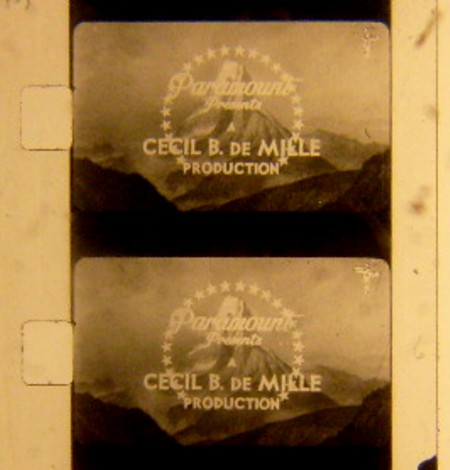
Yes, all 12 reels of this film had these markings at the beginning of each reel. There were three, or four sets of these six frame markings to ensure that the projectionist had his framing correctly per each changeover.
(also, in color, the opening trademark was in a red hue with gold lettering. Plus, it was totally crisp and sharp to look at on the screen. The cues themselves were in gold whereas the rest of the cues in the feature were in black.)
There's quite the article in the widescreen museum site on VistaVision that one could gain massive info on.
Paramount had the right idea with this format- creating a widescreen picture using a flat camera lens so the depth of field was held intact.
But as with Cinerama and Todd-AO, it became a costly process down the road and productions had to find a way to get things back in budget and find more effective ways to produce a film.
EDIT: In the link sent down below by Mr. Gabel , there were two sets of framing cues - not the quantity that I mentioned being that was over 30yr ago when I ran this film.
[ 07-22-2008, 07:03 PM: Message edited by: Monte L Fullmer ]
| IP: Logged
|
|
|
|
|
|
|
|
|
|
Monte L Fullmer
Film God
Posts: 8367
From: Nampa, Idaho, USA
Registered: Nov 2004
|
posted 07-23-2008 03:23 AM
quote: Mike Blakesley
it says that prints were 1.85:1 for this picture. But when we ran it in 1990 it was scope. Why and when was this change made? Or were the flat prints only used for the "popular price" engagements
"VistaVision" was Paramount's answer to Fox's "CinemaScope" distorted image to produce a wide screen picture, where those early Bausch & Lomb anamorphic lenses didn't have the elements as do the present Panavision lenses has within them.
Thus, on closeup scenes that were shot in "CS", the center part of the image still had a slightly expanded image.
Plus, with "CS" and creating a distorted image, the depth of field in the frame was lost due to the compression of the anamorphic lens. Paramount saw the way to keep this by shooting the scenes with horizontal, 8-perf film through a flat lens, thus keeping this dept of field, along with massive film area exposure to present a very sharp, wide screen image.
During the printing process is when the master film was offset 90 degrees to the printing negative, thus the hard matt frameline was introduced for standard 35mm releases. Thus, to the question: all VV releases were in flat.
As for the scope release, I'm not familar with that release, nor why it was specifically done. Yet, I'd take it as a fad like what MGM did with "Gone With the Wind" being released in 70mm (and this film was definitely a full-frame release! Can you imagine how much cropping took place with this 70mm version..?!), but only made a disaster out of these special releases - just to regain the attention of these films.
(can you imagine a present booth clown handling such a roadshow performance these days..??)
| IP: Logged
|
|
|
|
All times are Central (GMT -6:00)
|
This topic comprises 7 pages: 1 2 3 4 5 6 7
|
Powered by Infopop Corporation
UBB.classicTM
6.3.1.2
The Film-Tech Forums are designed for various members related to the cinema industry to express their opinions, viewpoints and testimonials on various products, services and events based upon speculation, personal knowledge and factual information through use, therefore all views represented here allow no liability upon the publishers of this web site and the owners of said views assume no liability for any ill will resulting from these postings. The posts made here are for educational as well as entertainment purposes and as such anyone viewing this portion of the website must accept these views as statements of the author of that opinion
and agrees to release the authors from any and all liability.
|

 Home
Home







![[Wink]](wink.gif)
![[Roll Eyes]](rolleyes.gif)







 Printer-friendly view of this topic