Film-Tech Cinema Systems
Film-Tech Forum ARCHIVE


my profile | my password | search | faq & rules | forum home
  next oldest topic   next newest topic
» Film-Tech Forum ARCHIVE   » Operations   » Film Handlers' Forum   » showing a silent movie right before Batman? (Page 6)

 
This topic comprises 7 pages: 1  2  3  4  5  6  7 
 
Author Topic: showing a silent movie right before Batman?
Leo Enticknap
Film God

Posts: 7474
From: Loma Linda, CA
Registered: Jul 2000


 - posted 08-02-2008 05:25 AM      Profile for Leo Enticknap   Author's Homepage   Email Leo Enticknap   Send New Private Message       Edit/Delete Post 
quote:
I just ordered 45mm lens – it cost $250 and a aperture plate for the Century SA-TA ($30) and a test film to help me file the plate ($4 per foot). WOW, I thought that the music business was expensive!
Assuming that's a decent lens it sounds to me like you got a pretty good deal. You'd pay that figure in pounds for an Isco Ultra-Star or similar here.

quote: Ralph Martin
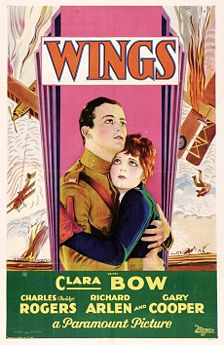
I just received the print for Wings today without reels. Just 7 round canisters and inside is film coiled around a plastic core. You’d think they would have shipped it with reels. That’s the way metropolis came to us last year. But it’s here and I suppose the theater technician knows how to build the print for the presentations.
That's the standard way release prints are shipped pretty much everywhere except in North America. Furthermore, archival elements are never mounted on solid spools for long-term storage, because the nitric or acetic acid offgases (if the film is nitrate or acetate) will get trapped between the flanges of the spool and the film pack, thereby accelerating the chemical decomposition process. Even if the film is polyester, residual bleach or hypo from the processing can cause a similar problem.

If your projectionist has a split spool (effectively a projection spool split down the middle, the hubs of which clip into the core to form the reel which can then be mounted on a projector, make-up table etc.), then no problem. If (s)he doesn't, then you'll need to get hold of one, and with the correct hub diameter for the equipment in that projection booth (there are a number of different ones in use). If your print is on 4" cores, then you might be able to 'borrow' a spool from another print in that booth which is currently on a platter, unclip the core from it and use that. These are actually split spools attached to 4" cores. However, IIRC (and I may be wrong in this), the plastic split spools on which most US release prints are shipped won't clip into 2" or 3" cores.

I can only presume that your Metropolis print was so widely used and in venues which aren't used to handling reels in cans and cores that they do keep that one on shipping spools to prevent problems.

In Britain this used to be a significant problem with 16mm prints. In the days of 16mm school, film society and other non-theatrical shows, these prints were almost always shipped on spools. When archives would ship them in cans and cores, the venue often didn't have a 16mm split spool and couldn't show them. As recently as the late '90s/early '00s, I'd occasionally get 'help!' phone calls from people in this situation.

 |  IP: Logged

Frank Angel
Film God

Posts: 5305
From: Brooklyn NY USA
Registered: Dec 1999


 - posted 08-02-2008 10:09 AM      Profile for Frank Angel   Author's Homepage   Email Frank Angel   Send New Private Message       Edit/Delete Post 
All went smashing with the Chaplin nite. Carl Davis is a character. The only glitch the whole evening was that the image froze for about 3 seconds -- if I were hooked up to an EKG, it would have made that flat-lining, high frequency "sorry, your dead" sound. Luckily for me, the thing unfroze and kept going without further incident for the rest of the show, but it took all the fun out of the rest of the night for me; I couldn't wait for it to be over. I could hear that Davis had to slow the orchestra down a bit to cover the time delay.

Ken Gordon, a silent film scholar was there and came to chat before the movie. He is an avid film advocate for all the silent-with-live-accompaniment shows that he organizes around Brooklyn. He questioned why when he looked up at the booth, he didn't see any film on the two Centurys. I told him it was video. He winced. I said, I would really appreciate his input, if he would try to evaluate what he saw objectively and let me know his thoughts. He said he would and would call me during the week.

Personally I think it looked every bit as good as he is used to seeing with his 16mm presentations -- certainly bigger than he could get with 16mm and much brighter; he could never do a presentation and reach the 5000 people we did with 16mm. We shall see what he says.

 |  IP: Logged

Ralph Martin
Film Handler

Posts: 30
From: Vacaville, Ca./ USA
Registered: Jul 2008


 - posted 08-02-2008 05:10 PM      Profile for Ralph Martin   Email Ralph Martin   Send New Private Message       Edit/Delete Post 
quote: Leo Enticknap
That's the standard way release prints are shipped pretty much everywhere except in North America.
Yet another challenge! [uhoh] That's ok Maybe they have the right spool. If not I'll get it for them. Thanks for the information.

I meet the projectionist this Friday morning to file the plate. Then Saturday morning to test-screen the print. I'm sure this is pretty standard stuff for you all, but for me this is really exciting! i hope it works.

quote: Frank Angel
All went smashing with the Chaplin nite. Carl Davis is a character.
I'm glad it went well - congratulations! Carl Davis is a great guy. I'm glad he let us perform his score to Wings. It's a really nice work. Huge too --- 2hrs 20min. -- My score is one thousand pages long!

 |  IP: Logged

Bernard Tonks
Jedi Master Film Handler
Posts: 619
From: Cranleigh, Surrey, England
Registered: Apr 2001


 - posted 08-03-2008 06:15 AM      Profile for Bernard Tonks   Email Bernard Tonks   Send New Private Message       Edit/Delete Post 
The original Paramount release of “Wings” was color tinted and had some sequences in an early widescreen process known as Magnascope. Some prints had synchronized sound effects and music, using the General Electric Kinegraphone (later RCA Photophone) process.

http://en.wikipedia.org/wiki/Information
Search: Wings (film), sorry direct link fails?

There used to be a website of the Carlton Theatre Haymarket that included details of the London premiere run of “Wings” in 1928 which had a Magnascope wide screen.
 -

[ 08-03-2008, 09:58 AM: Message edited by: Bernard Tonks ]

 |  IP: Logged

Richard Fowler
Film God

Posts: 2392
From: Ft. Lauderdale, FL, USA
Registered: Jun 2001


 - posted 08-03-2008 07:34 AM      Profile for Richard Fowler   Email Richard Fowler   Send New Private Message       Edit/Delete Post 
Regarding adjustable aperture plates on 35mm projectors, some European machines (Wassman Euro Kino - Spain) had ajustable aperture "curtains" with cams to readjust to different formats. Harbin projectors of China also use this on some of their models.
I have provided and projected both "Wings" and "The Wind" in Miami using a Cinemeccanica V5 with 3 blade shutter and D.C. motor with a tachometer.
Chaplin's Roy Export Company maintains most of his negatives and preservations. The DVD probably looked superior to the 16mm prints made from 1960's or earlier printing materials.

 |  IP: Logged

Ralph Martin
Film Handler

Posts: 30
From: Vacaville, Ca./ USA
Registered: Jul 2008


 - posted 08-03-2008 04:26 PM      Profile for Ralph Martin   Email Ralph Martin   Send New Private Message       Edit/Delete Post 
quote: Bernard Tonks
The original Paramount release of “Wings” was color tinted and had some sequences in an early widescreen process known as Magnascope. Some prints had synchronized sound effects and music, using the General Electric Kinegraphone (later RCA Photophone) process.

Our print contains all of the original tints but no magnescope scenes - I could only imagine what can of worms that would have opened for us [Eek!]

 |  IP: Logged

Gene Stavis
Film Handler

Posts: 26
From: New York, NY
Registered: Aug 1999


 - posted 08-03-2008 05:00 PM      Profile for Gene Stavis   Author's Homepage   Email Gene Stavis   Send New Private Message       Edit/Delete Post 
Magnascope was simply a matter of changing the lens to a shorter focal length and having a screen large enough to register the larger image. To the best of my knowledge, there was no difference in the film itself. The system was used as late as Selznick's "Portrait of Jennie".

 |  IP: Logged

Bernard Tonks
Jedi Master Film Handler

Posts: 619
From: Cranleigh, Surrey, England
Registered: Apr 2001


 - posted 08-03-2008 06:56 PM      Profile for Bernard Tonks   Email Bernard Tonks   Send New Private Message       Edit/Delete Post 
Ralph,

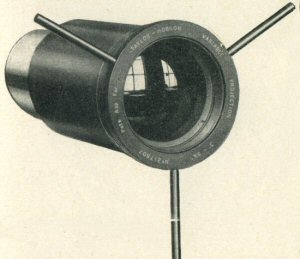
Magnascope was a simple projection process that is not even mentioned on Martin Hart’s The American WideScreen Museum. Reproduced as follows is the article in the book The Complete Projectionist by R. Howard Cricks, F.R.P.S (1943).

Magnascope Effects

A favourite effect in some cinemas is the “Magnascope” or wide-screen effect, in which the width and height of the screen may be increased by 75 per cent. for the presentation of special scenes- large crowd or stage scenes, certain types of shots in the news film, and so on. This is achieved by the variable focus zoom lens in conjunction with which is used an elaborate system of moving screen masking, by hand or motorised. If the alteration in lens focus carefully follows the enlargement of the screen, a very striking effect can be achieved; in certain types of scenes the screen masking should be opened out when objects are coming towards the camera, and the screen masking closed when they are moving away from it. These effects should however, be used with discretion; the projectionist or manager may be become so proud of the device that there is a risk of its being overdone and losing its novelty.

Variable Focus Zoom Lens.
 -

Martin Hart name correction made.

[ 08-05-2008, 05:19 AM: Message edited by: Bernard Tonks ]

 |  IP: Logged

Ralph Martin
Film Handler

Posts: 30
From: Vacaville, Ca./ USA
Registered: Jul 2008


 - posted 08-04-2008 05:09 PM      Profile for Ralph Martin   Email Ralph Martin   Send New Private Message       Edit/Delete Post 
That's amazing. It must have been quite a thing to see the picture oversize the original screen during particular scenes.

Now that I think of it -- there are some scenes that look peculiar. Like a plane flying into the camera and one of the characters is in a trench and crawls up to the camera so close it’s almost out of focus. I’ll bet that’s when the projectionist kicked in the “Magnascope.” That must have been fun back in 1927. It’s like those shots in 3-D movies where they make it a point to “throw” something at the audience for effect.

[ 08-04-2008, 11:43 PM: Message edited by: Ralph Martin ]

 |  IP: Logged

Ralph Martin
Film Handler

Posts: 30
From: Vacaville, Ca./ USA
Registered: Jul 2008


 - posted 08-06-2008 01:33 PM      Profile for Ralph Martin   Email Ralph Martin   Send New Private Message       Edit/Delete Post 
I can’t believe all of the help I’m getting!!!

Magna-Tech sent me a 50mm lens instead of the 45mm. They felt they were being a bit too conservative with the size at first. The 50mm was perfect (same price).

They also sent me 2 aperture plates (no extra charge) and told me to send back the other if I didn’t need it. Well, guess what? I needed it. I ruined the first one by going to fast and filing a bit too far on one side. I slowed down a lot after that. It took me almost two hours to finish the second plate [insert laughter here] but I didn’t want to hurry and mess that one up as well. Taking my time made all the difference. It turned out great.

So we screened the entire print and the tech figured out the house light effects and the “curtain call” at the end. ---- The “curtain call” was cool. When the movie ends the lights go up – the audience applauds as the orchestra and I bow. Then we extend a hand motion to the screen and the lights dim as a portrait of the movie director appears on the screen. Nice touch!

The theater got tuxedos for their employees to wear on the performance nights. They bought a roll-out red carpet to extend from the parking lot outside all the way to the seating area for the movie. They're hanging model bi-planes from the ceiling in the lobby and all of their concession stands are offering special Wings Snack Combos.

I don’t think I could ask for anything more from Brenden Theaters or Magna-Tech in terms of their support for our project and I certainly THANK YOU ALL in this forum for your help and patience with a projector novice as myself.

Now for the real fun part: The performance. [Smile]

 |  IP: Logged

Leo Enticknap
Film God

Posts: 7474
From: Loma Linda, CA
Registered: Jul 2000


 - posted 08-06-2008 03:22 PM      Profile for Leo Enticknap   Author's Homepage   Email Leo Enticknap   Send New Private Message       Edit/Delete Post 
Did the studios provide cue sheets for Magnascope effects? Presumably the zooming was supposed to be done at certain points in the action (as Ralph describes) rather than simply as a form of improvisation.

 |  IP: Logged

Jack Theakston
Master Film Handler

Posts: 411
From: New York, USA
Registered: Sep 2007


 - posted 08-07-2008 10:26 AM      Profile for Jack Theakston   Email Jack Theakston   Send New Private Message       Edit/Delete Post 
My understanding is that there was some sort of cue sheet that was sent with the shippers specifying the location of the Magnascope sequence.

The system was created by a technician named Lorenzo Del Riccio, and the premiere film for the patented system was OLD IRONSIDES (1924). From what I understand, the actual system was abandoned in the '30s, but the same concept was used for a number of premiere engagements up to the '50s, with films like PORTRAIT OF JENNIE and NIAGARA using it. Obviously not any old neighborhood theater could do this effect-- only larger theaters that had the stage space to open up to a larger screen.

Del Riccio also invented the large-format system Magnafilm.

 |  IP: Logged

Mark Lensenmayer
Phenomenal Film Handler

Posts: 1605
From: Upper Arlington, OH
Registered: Sep 1999


 - posted 08-07-2008 12:28 PM      Profile for Mark Lensenmayer   Email Mark Lensenmayer   Send New Private Message       Edit/Delete Post 
The Drexel Theatre in Bexley (Columbus), OH did something similar for NAPOLEON. On the 35mm print, when the 3 screen section came on, the 3 images filled the screen horizontally, but MUCH smaller vertically so all three images would fit on the screen. The Drexel had some white side panels put up next to the screen, and when the 3 screen section hit, the projectionist (yes, they had a union man at the time) operated a zoom-type lens to fill the screen and the panels. This was usually met with applause.

 |  IP: Logged

Mark J. Marshall
Film God

Posts: 3188
From: New Castle, DE, USA
Registered: Aug 2002


 - posted 08-07-2008 12:51 PM      Profile for Mark J. Marshall     Send New Private Message       Edit/Delete Post 
I can't wait to hear how this all turns out.

 |  IP: Logged

Leo Enticknap
Film God

Posts: 7474
From: Loma Linda, CA
Registered: Jul 2000


 - posted 08-07-2008 12:52 PM      Profile for Leo Enticknap   Author's Homepage   Email Leo Enticknap   Send New Private Message       Edit/Delete Post 
Thanks Jack. As with tinting and toning records and projection speed cue sheets, if only the pioneers of the film archive movement had placed as much emphasis on preserving related documentation as on preserving the films themselves, there would be so much more contextualising information at our fingertips now.

 |  IP: Logged


All times are Central (GMT -6:00)
This topic comprises 7 pages: 1  2  3  4  5  6  7 
 
   Close Topic    Move Topic    Delete Topic    next oldest topic   next newest topic
 - Printer-friendly view of this topic
Hop To:


Powered by Infopop Corporation
UBB.classicTM 6.3.1.2

The Film-Tech Forums are designed for various members related to the cinema industry to express their opinions, viewpoints and testimonials on various products, services and events based upon speculation, personal knowledge and factual information through use, therefore all views represented here allow no liability upon the publishers of this web site and the owners of said views assume no liability for any ill will resulting from these postings. The posts made here are for educational as well as entertainment purposes and as such anyone viewing this portion of the website must accept these views as statements of the author of that opinion and agrees to release the authors from any and all liability.

© 1999-2020 Film-Tech Cinema Systems, LLC. All rights reserved.