|
|
This topic comprises 7 pages: 1 2 3 4 5 6 7
|
|
Author
|
Topic: Any turntable junkies out there?
|
|
|
|
|
|
|
Scott Norwood
Film God

Posts: 8146
From: Boston, MA. USA (1774.21 miles northeast of Dallas)
Registered: Jun 99
|
 posted 02-29-2008 02:23 PM


The "stroboscope" is there to allow you to check the speed. It may be useful in calibrating your pitch control if there is an adjustment pot for the pitch range inside the unit and if the pitch control has markings (e.g. +/- 2%, 4%, etc.).
A standard turntable will have adjustments for tracking force, anti-skate, and tonearm height. These need to be set correctly unless you like bad sound and damaged records. The instructions that come with the cartridge/stylus should tell you how to mount the cartridge to the headshell (alignment here is important) and the recommended tracking force. If you don't have a cartridge or need a new one, find a good stereo shop; they can recommend a cartridge based on the characteristics of the tonearm (different types of arms work best with different types of cartridges). As others have mentioned, anti-skate is normally set to the same value as the tracking force, but this may need to be tweaked to keep warped disks from skipping. The tonearm height adjustment depends on the cartridge and the thickness of the disk.
I have a Technics SL-1200 with the stock arm and an AT440 cartridge. It's a tank, but not really the best-sounding unit available. At some point, I'd like to upgrade to a Thorens or some other mid-range belt-drive unit. The VPI cleaning machine is also on my "wish list."
| IP: Logged
|
|
Mark Ogden
Jedi Master Film Handler
Posts: 943
From: Little Falls, N.J.
Registered: Jun 99
|
posted 02-29-2008 02:32 PM
Here is how the strobe works: in a dark room, turn the turntable on and turn the quartz lock off. Notice the line of black dashes on the bottom edge of the turntable platter. Look at these dots thru the clear plastic piece on top of the strobe, and using the speed adjustment knob, adjust the speed of the platter until just the point that the dots seem to float in place, without moving to the left or right. This should be precisely 33.3 rpm. When you have done that, turn the quartz lock back on.
Anti-skating: You’ll need a flashlight and possibly magnifying glass for this. Place a record on the turntable and allow the tone arm to drop towards the center. Look at the relationship of the needle to the rest of the cartridge. The needle should still be perfectly centered to the body of the cartridge. If it looks like it’s deflecting one way or another, adjust the anti-skating until it stays centered both off the disc and on. Better: this is a long shot, but if you can lay your hands on an old transcription disc, or any other disc that has a blank (no grooves) side, just let the tone arm drop on it and adjust the anti-skating till it stays in place, that is, does not move inward.
| IP: Logged
|
|
|
|
|
|
|
|
|
|
|
|
Brad Miller
Administrator

Posts: 17775
From: Plano, TX (36.2 miles NW of Rockwall)
Registered: May 99
|
posted 03-01-2008 02:02 AM
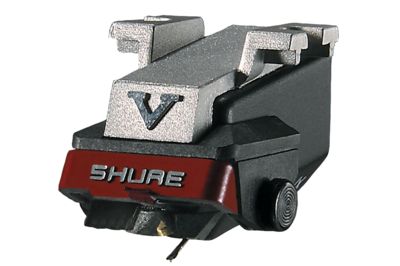
Garrard did make one very good turntable, the GT55. This was the final version of the Zero 100's linear pivoting articulated arm and produces fantastic sound when outfitted with a quality stylus and cartridge such as the Shure I posted above. I have been enjoying mine since 1976/1977ish and it still performs magnificently to this day.
One of the main reasons why the GT55 worked so well was because of the linear tracking, combined with a traditional pivoting arm. Here is a page I found on a google search which explains how it works. Inner groove distortion was something I never had to endure with this unit. ![[Smile]](smile.gif)
I recall taking the unit into Marvin Electronics in Fort Worth in the mid 80s where they were doing free "turntable evaluations" (which was a marketing trick to get audiophiles into the store to show them how their equipment did not perform as well as the $5000 unit they were pushing. I actually saw them sell 2 of them while I was in line!) Anyway, when my GT-55 got it's turn, the technician started chuckling at me a little bit, but then he just sat there and stared at his equipment as my little cheapie GT-55 was amazingly on par with their $5000 monster. Some of the guys behind me in line waiting to see how well their turntables performed were amazed, and borderline angry (no doubt because they had spent WAY more than I had).
I am actually seeking another one of these, as a backup. I have never truly liked any other turntable as much as this one. Anyway, don't knock Garrard as a whole, because they did make at lease one damn good turntable.
| IP: Logged
|
|
|
|
Steve Guttag
We forgot the crackers Gromit!!!

Posts: 12814
From: Annapolis, MD
Registered: Dec 1999
|
posted 03-01-2008 11:29 AM
Hmmmm....now this brings back memories. I spend a lot of time and $$$ trying to find MY perfect match of turntable and cartridge/stylus. For awhile, I used a Techniques SL-1301 with an array for cartidges...with an Audio-Technica cartridge eventually winning out on the best for it...Back then Sure was on the V15 type IV (just before Brad's). I must have spent 500-700 on cartridges to find the sound I was looking for.
I then found the turntable that suited me the best...a Mitsubishi LT-30. It is a linear track type and once again the cartridge search was on! Fortunately, I found home much sooner since th AT was still a good sounding unit...I eventually settled on a Signet TK-9LCa. That is the combination I have till this day. In fact, I just was able to locate a replacement stylus for it (new in the box dispite being discontinued for decade(s)).
The SL-1301, being a quite decent unit was outfitted with a lesser/larger stylus/cartridge (still and AT) to be used for lesser or damaged records so that tracking could be optimized for such records without affecting the settings for my higher end records. I had/have quite a collection of half-speed masters (Mobile Fidelity, Natulus and such), UHQRs, a couple of direct-to-discs and even imports on some titles, like Pink Floyd's THE WALL to get better (quieter virgin vinyl).
Sometimes it is like that scene in "This is Spinal Tap"...some of the records are in the "Don't Touch" category but there are touchable versions. Some were transfered to 1/2-track tape and the tapes are used for listening. I have a Cat Steven's "Tea for the Tillerman" UHQR still in the shrinkwrap ("don't even look at it".... ![[Wink]](wink.gif) ). While it is odd for me to have "not for use" items...every once in a while I check on ebay the value of UHQRs...and they are definately holding or rising! ). While it is odd for me to have "not for use" items...every once in a while I check on ebay the value of UHQRs...and they are definately holding or rising!
I swear to you that on some pressings, the vinyl versions are notably better than the CD versions but this is not always the case.
Other things I've been known to do to get that sound out of a turntable...take a set of identical phone books, put them down on the counter, lay a piece of wood on top of them, then take isolation pads and put them on the wood and then place the turntable on top...you can really knock down tonearm feedback with that technique. If you want to see how bad a problem you have...don't turn on the turntable (or stop the platter), set your tonearm down on the lead-in groove of any record (I suggest one tht you don't charish as each set down can cause a tick) and then choose the phono input with the volume down...slowly raise the volume and you will eventually get the system to feadback...the better the isolation the higher the volume you can get. That phonebook trick really knocks it down.
Steve
| IP: Logged
|
|
|
|
|
|
|
|
All times are Central (GMT -6:00)
|
This topic comprises 7 pages: 1 2 3 4 5 6 7
|
Powered by Infopop Corporation
UBB.classicTM
6.3.1.2
The Film-Tech Forums are designed for various members related to the cinema industry to express their opinions, viewpoints and testimonials on various products, services and events based upon speculation, personal knowledge and factual information through use, therefore all views represented here allow no liability upon the publishers of this web site and the owners of said views assume no liability for any ill will resulting from these postings. The posts made here are for educational as well as entertainment purposes and as such anyone viewing this portion of the website must accept these views as statements of the author of that opinion
and agrees to release the authors from any and all liability.
|

 Home
Home




![[Razz]](tongue.gif)




 Printer-friendly view of this topic