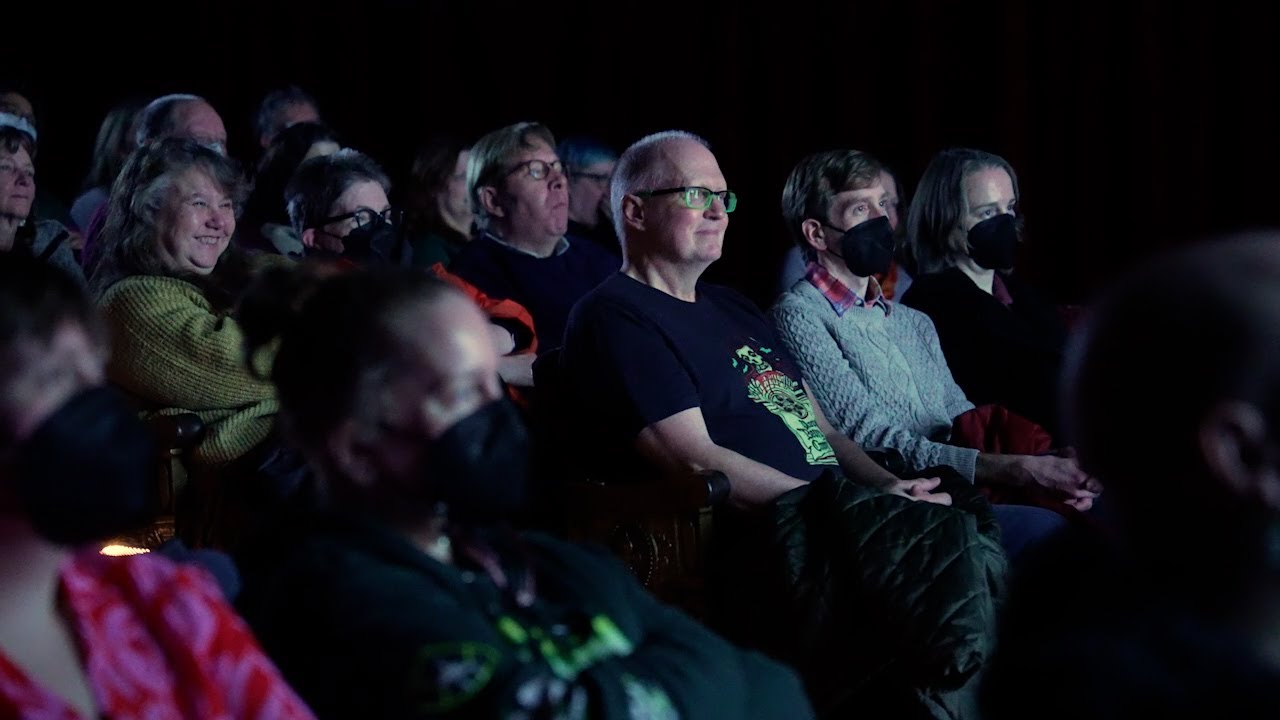
As Seattle’s movie theaters struggle, independent cinemas carve a niche

Collapse
X
 
  • Time
  • Show
Clear All
new posts
  • Marcel Birgelen
    Film God
    • Jan 2020
    • 3619
    • Maastricht, NL

    #16
    Originally posted by Mike Blakesley
    I don't understand why anyone would want to eat actual food in a theater. Popcorn is fine because you aren't using utensils. You can drop it all over yourself, no problem. If I'm eating a meal, I want to be able to see it. When you mix recliners in, that makes it even more ridiculous.
    People eat their dinner in front of the TV all the time, so I guess this is the "natural" extension of that...

    I'm kind of torn with those kinds of concepts. I guess it's not a bad idea to offer more than just popcorn and candy at the concession stand if you can handle it, but the seat service concept itself is pretty distracting, no matter how discrete the crew operates. Also, you should only serve food that works in such a setting. Maybe a sandwich or some chicken nuggets is fine, but a full meal you need to eat with fork and knife, like a steak with fries is problematic. Also, there is the smell of foods, which can become pretty distracting too.

    Around here, the "service cinema" concept, with seat service has been around longer than the Alamo Drafthouse, although the menu has always been just "finger food", not full meals, but there clearly is a market for it.

    Comment

    • Leo Enticknap
      Film God
      • Jan 2020
      • 3572
      • Loma Linda, CA

      #17
      Setting aside the rise and fall (or at least, noticeable contraction) of combined cinema/restaurants, the issue around nonprofits brings to mind the controversy Timothée Chalamet created for himself, by commenting that he didn't want movie theaters go the way of ballet and opera, claiming that "no-one cares" about those two art forms (and in doing so reminded me of my grandfather, who, after several glasses of single malt too many, once opined that a typical ballet performance consists of "47 anorexic women and a couple of poofters").

      Cue the predictable outrage from the ballet and opera world, though I liked the response from one opera company, which announced a special discount if you enter the discount code TIMOTHEE when booking.

      The point I'm coming to is that pretty much all the ballet and opera companies remaining in the western world are nonprofits, as are the entities that operate the buildings they perform in. In fact, about the only for profit anything in the classical music world is the record labels, and even they often receive grants and philanthropic donations to make individual recording projects viable. Also, I don't know if this is a straw in the wind, but most of the projects I've been doing recently that have involved major capital equipment purchase (projector, complete refresh of audio system, etc.) have been for non-profit customers: some of them movie theaters (or at least, most of the time movie theaters), and many for college campus theaters and mixed use performing arts venues. We are currently helping one venue that went under as a for profit during covid reopen under nonprofit ownership and management, and I'm hearing about other similar projects in prospect. From my perspective, it looks like the commercial movie theater industry is simply not able to invest in equipment upgrades right now. But the good news is that ironically, Chalamet might have a point, in that the future of cinema may be a very similar one to the future that opera and ballet were looking at in the early twentieth century.

      Comment

      • Jim Cassedy
        Film God
        • Jan 2020
        • 1450
        • San Francisco

        #18
        The 'booth photo' in the article is captioned : " DeAnna Berger works in the cramped
        projection booth at the Grand Illusion movie theater
        . ."
        There's a difference between a 'cramped booth', and a 'cluttered booth'. I've worked in
        both types- - and although 'cramped' and 'cluttered' are not always mutually exclusive,
        the booth in that photo is more cluttered than cramped in my opinion.

        Comment

        • Leo Enticknap
          Film God
          • Jan 2020
          • 3572
          • Loma Linda, CA

          #19
          The posters on the ceiling must make it feel really claustrophobic in that booth.

          Comment

          • Bobby Henderson
            Expert Film Handler
            • Jan 2020
            • 925
            • Lawton, Oklahoma

            #20
            Originally posted by Leo Enticknap
            But the good news is that ironically, Chalamet might have a point, in that the future of cinema may be a very similar one to the future that opera and ballet were looking at in the early twentieth century.
            I don't feel quite as hopeful. Even though a ballet or opera performance might appeal to a smaller, more "high brow" audience demographic it still falls into the category of live shows. Movies are pre-recorded entertainment. As such, audiences won't regard movies with the same value as they would a live stage play or concert. If those would-be customers can watch the same movie on their HDTV screen at home, or wait a very short amount of time to do so, they're not going to be so tempted to visit a cinema.

            To me it looks like so many cinemas still running are operating on a wing and a prayer, just struggling to stay in business -at least that's what I'm seeing with our local multiplex. And these are full time movie theaters, not a venue that might try to operate as a not-for-profit and show movies part time in some sort of multi-purpose show place. Some of the cinemas that have been closing lately were opened within the past 20 years. They're a generation or two into theater designs I don't think are remarkable at all.

            Newer theaters seem to be running down a check list of gimmicks. I think recliners create more problems than they solve. I'm not all that fond of the dine-in theater concept. If I'm going to do the dinner-movie night out thing, I'm going to eat at a restaurant that focuses on a certain food genre rather than deal with a theater whose food menu is likely to be jack of all trades, king of none. And then there's all the distractions of servers having to handle food and drink orders.

            I think cinemas need to focus on the basics: make the sound and projection quality as good as possible. Keep the auditoriums clean. Home theater setups can be really impressive. But they're not going to match the sense of scale you feel when watching a movie in a large-ish auditorium with flawless projection and fearlessly dynamic audio. Unfortunately it costs more money to put on that kind of show -money a lot of cinemas just don't have. Not with these short windows and declining audience numbers.​
            Last edited by Bobby Henderson; 03-10-2026, 08:30 PM.

            Comment

            • Randy Stankey
              Film God
              • Jan 2020
              • 1388
              • Erie, PA, USA

              #21
              On the posters, you might be right but I can take them or leave them. It would have been better to leave the ceiling blue like it was, originally. I've never seen another booth but mine with blue ceiling. You might not get it unless you have been in a room like that but dark blue is a great color for a projection room.

              However, the writing on the wall shows a true lack of class. I know, I know... It's inside jokes. I get it.
              But, you'd think that the photographer would have shopped it out.

              These are small things. Seemingly insignificant. Most people wouldn't think they matter. But it's the small things that add up.
              It's people who don't care. It's people who don't think. It's people who don't see the connections between things.
              It's people who hang film reels by the flanges and wonder why their film gets chowdered up. It's people who keep messy booths when the newspaper photographer is coming to do a story. It's people who build theaters with weird seating arrangements.

              It's people like us who took one look at those pictures and knew, within ten seconds, what really happened.

              It's people like them who say that people like us are too critical, then wonder why their theater went out of business.

              Comment

              • Leo Enticknap
                Film God
                • Jan 2020
                • 3572
                • Loma Linda, CA

                #22
                Originally posted by Bobby Henderson
                I don't feel quite as hopeful. Even though a ballet or opera performance might appeal to a smaller, more "high brow" audience demographic it still falls into the category of live shows. Movies are pre-recorded entertainment. As such, audiences won't regard movies with the same value as they would a live stage play or concert.
                Yes and no. Most of the operas and ballets that are (expensively) staged and/or recorded today were written between very roughly 1700 and 1900. So they are at least pre-recorded and then reproduced in one sense, in the same way that Hollywood tends to do remakes of its more popular movies. Those two centuries were the "golden age" of opera and ballet. Neither went totally away after that, but good luck trying to stage a Ring Cycle and make any money out of doing so nowadays (unless you're Anna Russell).

                It wouldn't surprise me if, by the mid 2200s, the twentieth and early 21st centuries were seen as the "golden age" of cinema, a cultural form that still exists, but has settled down to a relatively small but loyal following. Obviously I hope it remains mainstream, because getting out of the house and being part of a shared experience is fundamentally good for people. But I suspect that Chalamet's comparison of cinema with ballet and opera could have more to it than is obvious at first glance.

                Comment

                • Ed Gordon
                  Pro Film Handler
                  • Jan 2020
                  • 365
                  • Seattle, WA, USA

                  #23

                  03032026_1_132348.jpg?d=780x520.jpg

                  This Grand Illusion Theater did not go out of business. They lost their lease and are looking for a new venue. It is dependent on volunteers. Below is an overview of the organization:

                  The Grand Illusion Cinema, originally opened as The Movie House in 1970, is Seattle's longest-running independent cinema, known for showcasing foreign and revival films. It was renamed in 1979 by new owner Paul Doyle, and has operated as a volunteer-run nonprofit since 2004, becoming a beloved venue in the University District before facing relocation in early 2025 due to the sale of its building.

                  Overview of Grand Illusion Cinema

                  The Grand Illusion Cinema, located in Seattle's University District, is the city's longest-running independent cinema. It opened in 1970 as The Movie House and became Seattle's first intimate arthouse theater, showcasing foreign and revival films.

                  Key Historical Milestones

                  Founding and Early Years
                  • 1970: Opened as The Movie House by Randy Finley, originally in a converted dentist's office.
                  • 1971: Began an annual tradition of screening It's a Wonderful Life during December.
                  Name Change and Ownership Transitions
                  • 1979: Paul Doyle acquired the theater and renamed it Grand Illusion, honoring the 1937 film La Grande Illusion.
                  • 1997: Saved from closure by the Northwest Film Forum, which remodeled the venue and revitalized interest.
                  • 2004: Became a nonprofit organization, run entirely by volunteers.
                  Cultural Significance

                  The Grand Illusion has hosted numerous notable filmmakers and actors, including Quentin Tarantino and Eddie Izzard. It is known for its eclectic programming, featuring a mix of independent, foreign, and classic films, as well as late-night screenings of horror and sci-fi genres.
                  Recent Developments

                  In 2023, the building was sold to a developer, leading to uncertainty about the cinema's future. The lease was not renewed, and the last screening at its original location occurred on January 31, 2025. The cinema is currently seeking a new location to continue its legacy.
                  From Film Independent:

                  GRAND ILLUSION (Seattle, WA)

                  Seattle’s Grand Illusion Cinema—located in the U-District near the University of Washington—is the city’s longest running independent movie theater; an intimate space that shows everything from silent film to modern independent hits. Entering under the theater’s distinctively retro hand-painted sign, visitors entering the “charming confines” (per its website) of the theater, which in 2008 was named by Paste Magazine as one of the best movie houses in America. Weekend “late nights” programming includes and eclectic mix of horror, sci-fi and exploitation films, and over the years the cinema has hosted events with filmmakers including Quentin Tarantino, Don Hertzfeldt, Stuart Gordon, Takashi Miiki and lots more.


                  Grand Illusion Cinema takes an intermission after 50+ years of movie magic
                  ​


                  ​

                  Comment

                  • Ryan Gallagher
                    Film God
                    • Nov 2022
                    • 2855
                    • Austin, Texas, USA

                    #24
                    Originally posted by Leo Enticknap

                    Yes and no. Most of the operas and ballets that are (expensively) staged and/or recorded today were written between very roughly 1700 and 1900. So they are at least pre-recorded and then reproduced in one sense, in the same way that Hollywood tends to do remakes of its more popular movies. Those two centuries were the "golden age" of opera and ballet. Neither went totally away after that, but good luck trying to stage a Ring Cycle and make any money out of doing so nowadays (unless you're Anna Russell)..
                    I was in that Opera and Ballet world before this role. Believe it or not people are still writing new Operas. Filling a house for multiple days to see an unfamiliar one seems to be the challenge there. Opera audiences are aging out even faster than in person cinema audiences, Opera started struggling to create new audience long before Film did.

                    This is not too unlike our conversations about how the film classics and re-releases still seem to have a loyal following, but you really gotta knock it out of the park with a contemporary film to get anywhere close to historic levels of eyeballs.

                    Where our local opera has had some cross-over successes is doing Opera stagings of popular broadways... but one has to question if that is even really opera anymore. It is sung in opera voice by principal singers without microphones... so that is something.

                    Comment

                    • Marcel Birgelen
                      Film God
                      • Jan 2020
                      • 3619
                      • Maastricht, NL

                      #25
                      Originally posted by Leo Enticknap
                      Setting aside the rise and fall (or at least, noticeable contraction) of combined cinema/restaurants, the issue around nonprofits brings to mind the controversy Timothée Chalamet created for himself, by commenting that he didn't want movie theaters go the way of ballet and opera, claiming that "no-one cares" about those two art forms (and in doing so reminded me of my grandfather, who, after several glasses of single malt too many, once opined that a typical ballet performance consists of "47 anorexic women and a couple of poofters").
                      To a great extend, this already happened, didn't it?

                      Art house is a thing and mostly driven by non-profit exhibitors and a lot of small and bigger government grants here and there. Meanwhile, at least around here, "art house" or "alternative cinema" seems to be doing better than the commercial, first-run cinema.

                      And also let's be honest, even Hollywood has tapped into the vast market of international subsidies and grants for their productions...

                      Comment

                      • Leo Enticknap
                        Film God
                        • Jan 2020
                        • 3572
                        • Loma Linda, CA

                        #26
                        Originally posted by Ryan Gallagher
                        I was in that Opera and Ballet world before this role. Believe it or not people are still writing new Operas.
                        Many years ago, as a student, I was roped in to rehearsal pianist duties for my then girlfriend, who was singing the role of Pat in a college production of John Adams's Nixon in China; so I have at least some idea of more recent operas. Ironically, in the actual stage production she was in, microphones were used as props in many of the scenes, but they weren't actually doing anything! As you point out, one of the things that distinguishes opera is that all amplification is strictly acoustic.

                        Comment

                        • Marcel Birgelen
                          Film God
                          • Jan 2020
                          • 3619
                          • Maastricht, NL

                          #27
                          Opera is alive and kicking... Ever been to Italy? Opera is a way of life there. I've seen some great high-budget performances in houses with hundreds of years of history. Heck, experiencing an opera performance in the Verona amphitheater (with THOUSANDS of years of history) is something anybody that gives a bit about live performances should have on their bucket list. (Although those performances are electronically amplified, which might annoy the hard-core purist. ).

                          Comment

                          • Ryan Gallagher
                            Film God
                            • Nov 2022
                            • 2855
                            • Austin, Texas, USA

                            #28
                            Originally posted by Marcel Birgelen
                            Opera is alive and kicking... Ever been to Italy? Opera is a way of life there. I've seen some great high-budget performances in houses with hundreds of years of history. Heck, experiencing an opera performance in the Verona amphitheater (with THOUSANDS of years of history) is something anybody that gives a bit about live performances should have on their bucket list. (Although those performances are electronically amplified, which might annoy the hard-core purist. ).
                            Choosing to mic and amplify opera singers is always going to be a venue acoustics choice. They may even be mic'd but the mic's are only used for the more dialog scenes in the more modern operas. Supers and Chorus may or may not be reinforced too... but more likely than the principals on any given production.

                            And yeah, as far as opera struggling, I was mostly referring to US Opera audiences, where many operas have closed or consolidated to a single state opera in one major metro area.

                            Comment

                            • Leo Enticknap
                              Film God
                              • Jan 2020
                              • 3572
                              • Loma Linda, CA

                              #29
                              Originally posted by Marcel Birgelen
                              Opera is alive and kicking... Ever been to Italy?
                              I never claimed that it was dead and buried! Rather, that it had evolved from mass entertainment in the 18th and 19th centuries into what is now a niche interest art form with a small but devoted following, and which tends to pass the enthusiasm on through successive generations (the point I was headed to being a prediction that cinema could go the same way). I'm afraid that I never made it to Italy (growing up in the UK just before the era of budget airlines, Southern Europe took enough time, money, and effort to get to that not many Brits did). My only experience of "opera done right" is having seen Der fliegende Holländer at Bayreuth. It was conducted by the now infamous James Levine, obviously before he'd been outed as a class A pervert.

                              Comment

                              • Mark Gulbrandsen
                                Film God
                                • Jan 2020
                                • 3093
                                • Nashville, TN

                                #30
                                Originally posted by Mike Blakesley
                                I don't understand why anyone would want to eat actual food in a theater. Popcorn is fine because you aren't using utensils. You can drop it all over yourself, no problem. If I'm eating a meal, I want to be able to see it. When you mix recliners in, that makes it even more ridiculous.
                                I had a customer for many years in Stoughton, Wi that ran a Movie Theater - Pizza - Ice Ceam Parlor combo. You could order a pizza to eat while you watched a movie, Or pick the pizza up and take it home. I do remember his X-Large pizza weighed 14 pounds going into the oven! Or you could just buy Pop Corn.
                                He had done real well with the place starting out in an old Single Screen Theater, and after a few years moving into a much larger building and having 5 screens. It lasted 30 years and was shut down by COVID.
                                Attached Files

                                Comment

                                Working...