70mm film handling done (sorta) wrong!

Collapse
X
 
  • Time
  • Show
Clear All
new posts
  • Brad Miller
    Administrator
    • Dec 2019
    • 373
    • Plano, TX, USA

    #31
    Addressing the last few comments and confusion.

    The pair of gloves shipped with the Platter Loader, not the print. There was never any intention of having people wear gloves when threading the platter. It's a complete waste. Everyone expects the first 10 feet of protection leader on changeover prints to be handled bare-handed. Same for the first 50-60 feet of protection leader on the platter prints.

    Some people prefer to wear gloves when splicing and handling prints on the rewind table. Other people have their own methods of only touching the film by the edge and can do so without leaving any fingerprints. Either is fine. What matters is the quality of the splice. The projectionists who truly know what they are doing will handle that leader and put it back on without any dirt or even a mark on the leader. Anyone who utters things such as "it doesn't matter, we don't project the leader" are the actual problem people because it shows that they aren't able to grasp how dirt migrates and how that dirt then turns into scratches with future runs.

    But to fixate only on wearing gloves vs. not wearing gloves during the splice? Again, I've seen lots and lots of splices made without gloves that have no fingerprints or marks. It CAN be done.

    Originally posted by Steve Guttag
    The reason for the longish leader that is provided with modern prints (and what I always put on prints in my days of showing movies...repurposing old trailers, is that yes, human hands can touch it as it is "scrap." Will dirt and oils get on it...you bet. Will it reach the important parts? Nope. I always removed it before shipping out. I suspect that F-T ultrasonically cleans the stuff upon return or before it would ship out again.
    ​​

    Getting back to the leaders, on a changeover house after they thread in the first 10 feet, there is about a solid minute of the projector motor running at full speed before the Academy countdown starts pulling down from the feed reel. On a platter house, after they thread in the first 50-60 feet there is about 2 minutes of the projector motor running at full speed before the Academy countdown. The intent here is twofold. First, to make the handling section of the leaders far enough away so dirt migration isn't an issue. Second, it gives the projectionists time to literally look at the machine running full speed after the thread to look for anything not sitting properly, a loop hitting something, etc. This has drastically reduced the amount of startup issues on returning prints.

    And yes we do run each print through one of our ultrasonic cleaners running perc before they ship out again. Without that, all the dirt left on the print from the previous venue will just lower the presentation of the next venue to play that print and also speed up the inevitable process of cinch scratches appearing due to the dirt being an abrasive from film layers that slip against adjacent layers.

    Originally posted by Steve Guttag
    I'd also would have liked it if I saw that film was being inspected as it was being built and the joins/splices checked.
    ​

    You might be shocked to learn this, but most theaters just add extra dirt and marks to the print when they do this. If it's a library title, there is certainly an argument for this, but on a brand new print where your theater is the first to play it, the preference is to just load it direct to the platter. The less handling, the better.


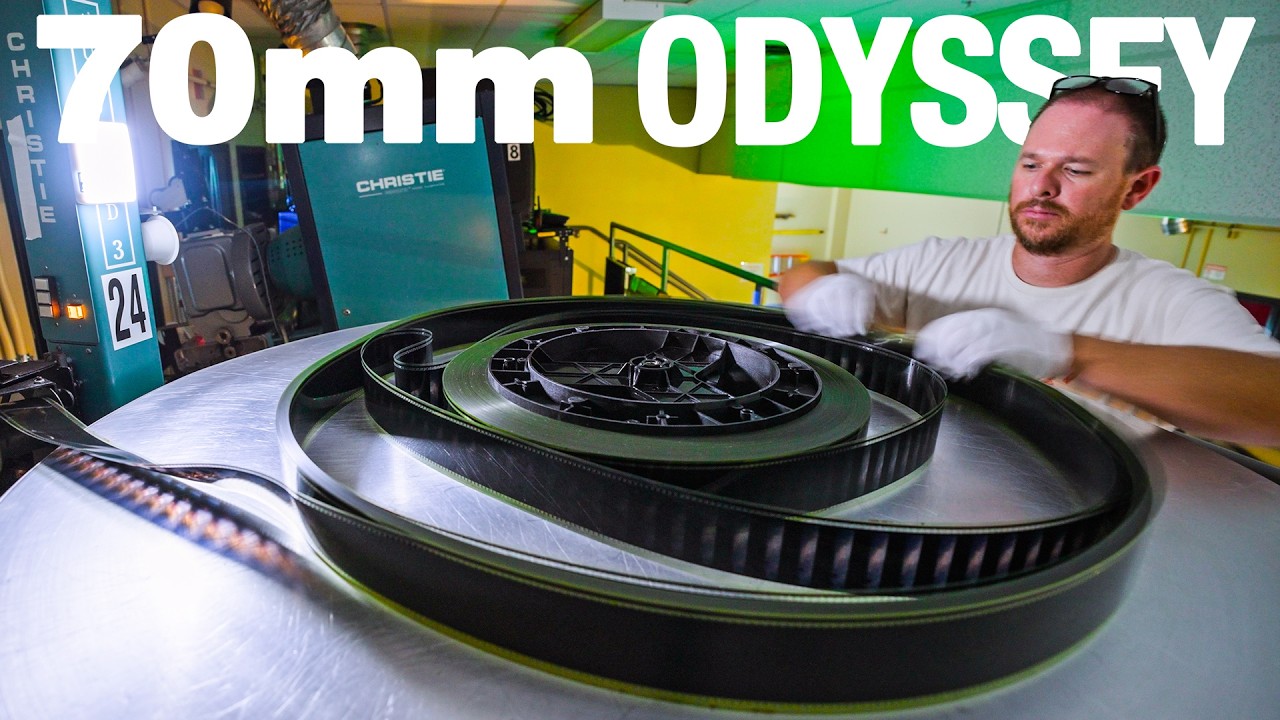
    Comment

    • Steve Guttag
      Film God
      • Jan 2020
      • 3777
      • Annapolis, MD

      #32
      I've had too many splices fail (both ultrasonic and cement) where one corner is starting to give. Twice in as many years, I've seen the results of a break where none should have been too. Was it a factory splice? Dunno but I would have known for sure if the spices were checked.

      Comment

      • Brad Miller
        Administrator
        • Dec 2019
        • 373
        • Plano, TX, USA

        #33
        Damn Steve, you should call your tech in there to investigate why your projectors are being so rough on the film!

        Comment

        • Steve Guttag
          Film God
          • Jan 2020
          • 3777
          • Annapolis, MD

          #34
          The most recent one was on one of those Jay-jay things being fed by one of those lazy-susan do-dads.

          Comment

          • Brad Miller
            Administrator
            • Dec 2019
            • 373
            • Plano, TX, USA

            #35
            As is the case with most projectors, in my travels it seems the JJ model has the potential to be super rough on film or incredibly gentle on film. If it has all original parts in good condition and if the clearances on pad rollers, gate, trap and shoe are very carefully adjusted, there will be basically no shedding. If it has aftermarket parts that are not "mirror polished", or slightly out of spec, or the clearances and alignments aren't precisely where they should be and so forth, they can be incredibly abusive to film. A lot of issues with JJs in the field can be resolved via a tech with expertise, patience and a desire to get things perfectly dialed in, but it's 2026 and sadly those people are in very short supply these days.

            To your point, I have come across a couple of JJs in the field that were so misaligned it was almost impossible to advance a frame via the motor flywheel if I had a loop of film threaded in the gate/trap. And yes this was even with the gate tension backed fully off. (Obviously I took the time to fix it, but whoever left it like that after the install shouldn't be installing...or for that matter whoever rebuilt the machine in the first place shouldn't be "rebuilding".) Still if an ultrasonic splice is breaking, that projector has some serious problems that need to be addressed.

            Comment

            • Steve Guttag
              Film God
              • Jan 2020
              • 3777
              • Annapolis, MD

              #36
              Another thing to add to your list of what JJs need in the field...stripppers (no, not that kind...but it could help on some films)...I've seen intermittents missing them and feed sprockets with the wrong one or so misaligned that it might actually help pack the film onto the sprocket!

              And yes, like you, I recently had a machine that didn't want to turn over by hand anymore. Piece-by-piece, that was rectified to the point it turned over freely.

              And people...if it has metal on metal contacts...IT NEEDS LUBRICATION (depending on the parts, it needs oil (intermittent, feed sprockets...anything with an oilite bearing). Gear, in a Century (including the main drive that is hidden way down there) need grease (TU-235...Super Lube). If the fiber gears are not glistening (looking wet) all of the way down into the depth of the gear, it isn't good enough and yes, you have to push it in.

              The number of loose fasteners I've come across is also a scary thing.

              Comment

              • Marcel Birgelen
                Film God
                • Jan 2020
                • 3619
                • Maastricht, NL

                #37
                So, basically, the classic JJ’s tale: strippers (of the wrong kind), misaligned sprockets, and the magical belief that ‘good enough’ grease is just a myth, like Bigfoot or the Sprocket-tooth Fary... or a projector that doesn’t need a priest to perform last rites on it. Next you’ll tell us the real secret ingredient is duct tape and hope?

                Comment

                • Ryan Gallagher
                  Film God
                  • Nov 2022
                  • 2855
                  • Austin, Texas, USA

                  #38
                  Okay to spin off my other comment about why don't we (especially us younger folks) be brave enough to share our booth practices so that we can learn some valuable lessons from eachother.

                  Drew IS brave enough to put his methods out there because film booths are cool, people love the inside perspective (the number of tours I have to give is testimony to that).

                  But in the spirit of learning from eachother... here's @Andrew Walker latest journey recovering from a projector that needed servicing mid screening:


                  Please don't think sharing this latest here as inviting undue harsh criticism, everyone might learn something and be better off next time. I saw FTDepot already replied on youtube. I threw another idea down over there, but I stand to be corrected not being a platter operator.

                  Here is a fake quote so Drew can get notified and participate (when his hands are not full)
                  Originally posted by Andrew Walker
                  ...
                  Last edited by Ryan Gallagher; 07-29-2026, 06:45 PM. Reason: had the wrong video link initially.

                  Comment

                  • Andrew Walker
                    • Jul 2026
                    • 10
                    • Bozeman, Montana

                    #39
                    Originally posted by Ryan Gallagher
                    Okay to spin off my other comment about why don't we (especially us younger folks) be brave enough to share our booth practices so that we can learn some valuable lessons from eachother.

                    Drew IS brave enough to put his methods out there because film booths are cool, people love the inside perspective (the number of tours I have to give is testimony to that).

                    But in the spirit of learning from eachother... here's @Andrew Walker latest journey recovering from a projector that needed servicing mid screening:


                    Please don't think sharing this latest here as inviting undue harsh criticism, everyone might learn something and be better off next time. I saw FTDepot already replied on youtube. I threw another idea down over there, but I stand to be corrected not being a platter operator.

                    Here is a fake quote so Drew can get notified and participate (when his hands are not full)
                    Yeah, the comments on the YouTube video have been filled with people suggesting other methods...like I knew it would be. So far, most people have been right about the other methods working. But for me I liked it being slow and steady to keep a close eye on the print. It paid off because there were zero marks on my print from this whole thing.

                    Comment

                    • Ryan Gallagher
                      Film God
                      • Nov 2022
                      • 2855
                      • Austin, Texas, USA

                      #40
                      Originally posted by Andrew Walker

                      Yeah, the comments on the YouTube video have been filled with people suggesting other methods...like I knew it would be. So far, most people have been right about the other methods working. But for me I liked it being slow and steady to keep a close eye on the print. It paid off because there were zero marks on my print from this whole thing.
                      I'm glad you posted it. I always assumed that kind of knocking sound was the "century knock" associated with an intermittent that had developed flat spots on the starwheel or cam etc. Apparently a common sound with them as they start to go. But yours proved to be something much easier to fix, a loose flywheel (set screw i assume)!!

                      One of our JJs has a very subtle occasional tapping sound (nothing as pronounced as your failure), now you've got me wondering if we just need to check the flywheel too. Good stuff. (other than the predictable onslaught of film handling critique).

                      My first instinct was "is a cut and a splice really necessary"? Specifically a NEW cut and splice, rather than one of the reel splices. I'm not as versed with how rollers are threaded on platters and guides, fully captive or not etc. So I thought maybe?

                      FTDepot suggested a platter motor/control configuration change to use it to bypass projector using just a single roller near the projector. Seems extremely valid (if that bypass mode of control is in your repertoire).

                      I was the one who commented maybe unthreading and tagging the film out of the way, let the repair proceed, confirm repair with loops, and then confirm full confidence with the remainder of the unfinished screening. But perhaps i'm missing a nuance with platters that makes that less appealing. Sure you have to handle a bit of picture to unthread and rethread, but that seems preferable to all the handling and risk your method required?

                      The upshot of FTDepot and your method was you were ready to thread the first screening the moment the repair was complete. My method would have had a required gap after the repair, perhaps losing another screening due to a schedule push.

                      You were obviously as careful as you could be with your chosen method. I think Brad and others will critique you for the probably unnecessary splice, risk of dumping the partial print, the risk of cinch scratches between the manually loose windings, both while doing it, and mechanical aspects pulling on them later when emptying that partial core.

                      I've just come to accept that there is almost always a better way than what I'm able to invent on my own on the spot. So I tend to ask around.

                      The fact you started down one path, and then hit the "oh wait, this isn't going to work" once the film got too heavy to turn by hand... sure sign somewhere in the universe there was probably a better way.
                      Last edited by Ryan Gallagher; 07-29-2026, 09:38 PM.

                      Comment

                      • Ryan Gallagher
                        Film God
                        • Nov 2022
                        • 2855
                        • Austin, Texas, USA

                        #41
                        I'll share a fairly recent teachable moment of my own to balance the scales:

                        Mostly being a classics/library/archive screening venue, it's pretty rare that we deal with a new print on cores or in cans, and both of us are relatively inexperienced in that mode. Both myself and the other projectionist made the same rookie/inexperienced mistake with a studio print for a premier tech-check.

                        We carefully de-cored it and wound it onto our best house reels . The whole time not catching that it was shipped emulsion in. I did a couple reels one day and my co-projectionist finished prepping on his shift.

                        Came time for the tech-check and based entirely on muscle memory we threaded her up and let her rip. Picture backwards and soundtrack on the wrong side!

                        Full of panic and embarrassment with studio and creative folks present, we had to quickly invent how to proceed. We probably should have pulled both reels off and taken them to the rewind bench.... but because we realized early we could flip the upper reel feed to fix the problem, we got set into a mode and just did an awkward handling maneuver between the two of us to wind the film back onto the feed reel still on the projector.

                        It was a relatively quick recovery but probably was lacking on the best film handling front. Once she was rolling we fixed reel 2 similarly (but with much less footage to worry about)... then went back to the rewind bench and did the necessary double rewinds to get the rest of them in condition where muscle memory would be correct instead of incorrect.

                        When you feel like you "have" to do something a certain way being in a rush, and then it starts to feel awkward. Probably time to pause and rethink.

                        (and don't assume because it's a new print you barely have to look at it during "inspections").

                        Best lessons are learned the hard way!
                        Last edited by Ryan Gallagher; 07-29-2026, 10:08 PM.

                        Comment

                        • Andrew Walker
                          • Jul 2026
                          • 10
                          • Bozeman, Montana

                          #42
                          Originally posted by Ryan Gallagher

                          I'm glad you posted it. I always assumed that kind of knocking sound was the "century knock" associated with an intermittent that had developed flat spots on the starwheel or cam etc. Apparently a common sound with them as they start to go. But yours proved to be something much easier to fix, a loose flywheel (set screw i assume)!!

                          One of our JJs has a very subtle occasional tapping sound (nothing as pronounced as your failure), now you've got me wondering if we just need to check the flywheel too. Good stuff. (other than the predictable onslaught of film handling critique).

                          My first instinct was "is a cut and a splice really necessary"? Specifically a NEW cut and splice, rather than one of the reel splices. I'm not as versed with how rollers are threaded on platters and guides, fully captive or not etc. So I thought maybe?

                          FTDepot suggested a platter motor/control configuration change to use it to bypass projector using just a single roller near the projector. Seems extremely valid (if that bypass mode of control is in your repertoire).

                          I was the one who commented maybe unthreading and tagging the film out of the way, let the repair proceed, confirm repair with loops, and then confirm full confidence with the remainder of the unfinished screening. But perhaps i'm missing a nuance with platters that makes that less appealing. Sure you have to handle a bit of picture to unthread and rethread, but that seems preferable to all the handling and risk your method required?

                          The upshot of FTDepot and your method was you were ready to thread the first screening the moment the repair was complete. My method would have had a required gap after the repair, perhaps losing another screening due to a schedule push.

                          You were obviously as careful as you could be with your chosen method. I think Brad and others will critique you for the probably unnecessary splice, risk of dumping the partial print, the risk of cinch scratches between the manually loose windings, both while doing it, and mechanical aspects pulling on them later when emptying that partial core.

                          I've just come to accept that there is almost always a better way than what I'm able to invent on my own on the spot. So I tend to ask around.

                          The fact you started down one path, and then hit the "oh wait, this isn't going to work" once the film got too heavy to turn by hand... sure sign somewhere in the universe there was probably a better way.
                          There's always a better way in hindsight. I always like hearing what others would have done and its easy to do when you aren't doing it. Being a projectionist through a screen is always easier. I did take the picture out of the projector head and rollers...was as careful as I could be. I have yet to find a scratch in the section I was working on. My method may have been very tedious but it worked and kept the print looking good.

                          Comment

                          • Marcel Birgelen
                            Film God
                            • Jan 2020
                            • 3619
                            • Maastricht, NL

                            #43
                            I've refrained from any direct criticism, because I'm not pretending to know "the best" method. There are quite a few people around here that are extremely passionate about film and it's mostly a good thing, since film is a dying medium and maintaining this finite pool of prints needs some passion and dedication, they may be a lot stronger opinionated. In the end, the only thing that's relevant is the result.

                            What was new for me is building the actual print on the platter and while I've seen people chopping up prints directly FROM the platter, t's the first time I've seen somebody building a print this way. I think that's pretty adventurous and maybe not the best solution for those who haven't handled a lot of prints and don't exactly know how their platter works. For me, building a print always involved a makeup table and I still think that's the safest way to build prints.

                            Comment

                            • Andrew Walker
                              • Jul 2026
                              • 10
                              • Bozeman, Montana

                              #44
                              Originally posted by Marcel Birgelen
                              I've refrained from any direct criticism, because I'm not pretending to know "the best" method. There are quite a few people around here that are extremely passionate about film and it's mostly a good thing, since film is a dying medium and maintaining this finite pool of prints needs some passion and dedication, they may be a lot stronger opinionated. In the end, the only thing that's relevant is the result.

                              What was new for me is building the actual print on the platter and while I've seen people chopping up prints directly FROM the platter, t's the first time I've seen somebody building a print this way. I think that's pretty adventurous and maybe not the best solution for those who haven't handled a lot of prints and don't exactly know how their platter works. For me, building a print always involved a makeup table and I still think that's the safest way to build prints.
                              Having a make up table would have been handy. But given the limited options I feel like this was the best choice for me. I'm sure plenty of people will disagree. But they weren't here.

                              Comment

                              • Brad Miller
                                Administrator
                                • Dec 2019
                                • 373
                                • Plano, TX, USA

                                #45
                                The Loader is a MakeUpTable (MUT). It's just not a free-standing MUT with wheels. The Loader simply converts an empty deck into the reel shaft found on a MUT, otherwise it's the same. There are 2 limitations of it vs. a conventional MUT. First, loading speed is the same as from a free-standing MUT, but the breakdown speed is based upon the platter's physical ability to spin a deck at it's fastest vs. a separate motor housed in a free-standing MUT which could spin the reel the film is being broken down onto at a much higher speed. So the end result is breakdown takes a bit longer, of which happens once on these special engagements. To the studios, spending an extra hour of contracted payroll labor time for a slower breakdown and not having to incur all of the absurd costs involved in delivering the print fully assembled on one of those oversized split reels is a no-brainer. Also the big Show Shipper reels always caused film damage during return shipping whereas the breakdown wind from a Loader is absolutely flawless. Perfectly tight, perfectly smooth and flat. It does a far superior job than any MUT can, which protects the film from shipping damage during return-transit.

                                The second limitation of the Loader is you have to have an adjacent empty deck, meaning you can't have a print on the top and middle platter, but break the print that is resting on the top platter down to the bottom (the print on the middle platter would be in the way). Since there are 70-80 of these MUT-less 70mm projection systems out in the field, and factoring in the incredibly rare incidents of having 2 different prints on the platter at the same time, this solution was better for a long list of reasons, these two points I just explained being the only negatives.

                                Andrew was CLEARLY afraid of the Loader in his first video, but I consider that a good thing. It got him to start slow and make sure he got a feel for how it worked during the loading of the leader and then in the next shot it was clear he got comfortable in seeing how it worked in person and he had cranked up the speed to a normal setting for loading. However during that dramatic sequence (likely designed for YouTube engagement) he seems to have scared people into thinking it was dangerous.

                                I stated previously that Andrew's Oppenheimer print came back in nice condition, so that proves he knows (at minimum) the basics needed to run a print via platter (at least until the point something went wrong). That doesn't change the fact that the procedure he showed in this video is the absolute dead wrong way to go about resetting the print and put it at high risk of damage. The bulk of his experience is with reel to reel, which is fine, but regardless the biggest failure is he did not reach out to us to report the print dilemma and get official direction on the proper way to handle this scenario. Universal hired Film-Tech specifically to handle all aspects of the prints from positive assembly to shipping, projectionist support in the field for anything print related (or which can cause print related issues) as well as return inspections, ultrasonic cleaning, etc. Similarly Universal also hired BLS to handle all preventive maintenance service call checks, emergency equipment field repairs and projectionist hiring. There might be a tiny bit of crossover between BLS and Film-Tech in the instance a piece of equipment is causing print scratches or damage, but this scenario clearly required both. BLS was obviously called to provide the initial consultation and confirm the diagnosis on the noise he heard and then to dispatch a field technician (most likely with replacement parts), as we saw the field tech and the machine back up and running. However Andrew failed to call FT regarding how to handle the print dilemma which is a requirement of the job and his comments here and on youtube seems to indicate he is incapable of acknowledging that.

                                Yes there is often more than one acceptable way to resolve a problem, but that doesn't mean every method is acceptable when the risk factors (especially cinch scratching) are added into the equation. We would never have approved his solution. The proper solution is so simple he would not have even needed to cut the film. I don't fault Andrew or anyone for having ignorance on some aspect of a job. There are indeed many very good projectionists who have actually never had a failure mid-show on a platter. None of us in this world knows everything, but some people have decades of experience and expertise of which could have, and should have been called upon before starting to bs his way through it. (And no "ignorance" does not in any way mean "stupid" or "dumb". Look it up.)

                                Personally I think Andrew should consider writing and directing some suspenseful thrillers. I know I'm not the only one here who watched his video and found his approach to the dilemma was more tense and stressful than just about any movie I can recall seeing.

                                Comment

                                Working...