image.png
Radioactive toothpaste, circa 1920s.
-
The burning BMW had been set alight by an arsonist. This photo was to illustrate a politically contentious news story, so I didn't post the actual context. The spoof caption (inspired by the couple watching the conflagration passively, seemingly unconcerned and behaving as if this is an everyday occurrence) was because there have been frequent reports (on this side of the pond, at any rate) of thermal runaway in Tesla battery packs causing the result you see above.Leave a comment:
-
Apparently, BMW recalled a few million cars already during the last years, because a critical element in the EGR system was made out of plastic and has the tendency to burn trough and leak highly flammable diesel gasses into your engine compartment...
Not saying this was the problem here, but BMW most definitely has a burning car problem. It reminds me of another recent discussion about another Geman manufacturer going all-Chinese by replacing parts formerly made out of stainless steel with cheap plastic...
But I actually came here to post he following video:
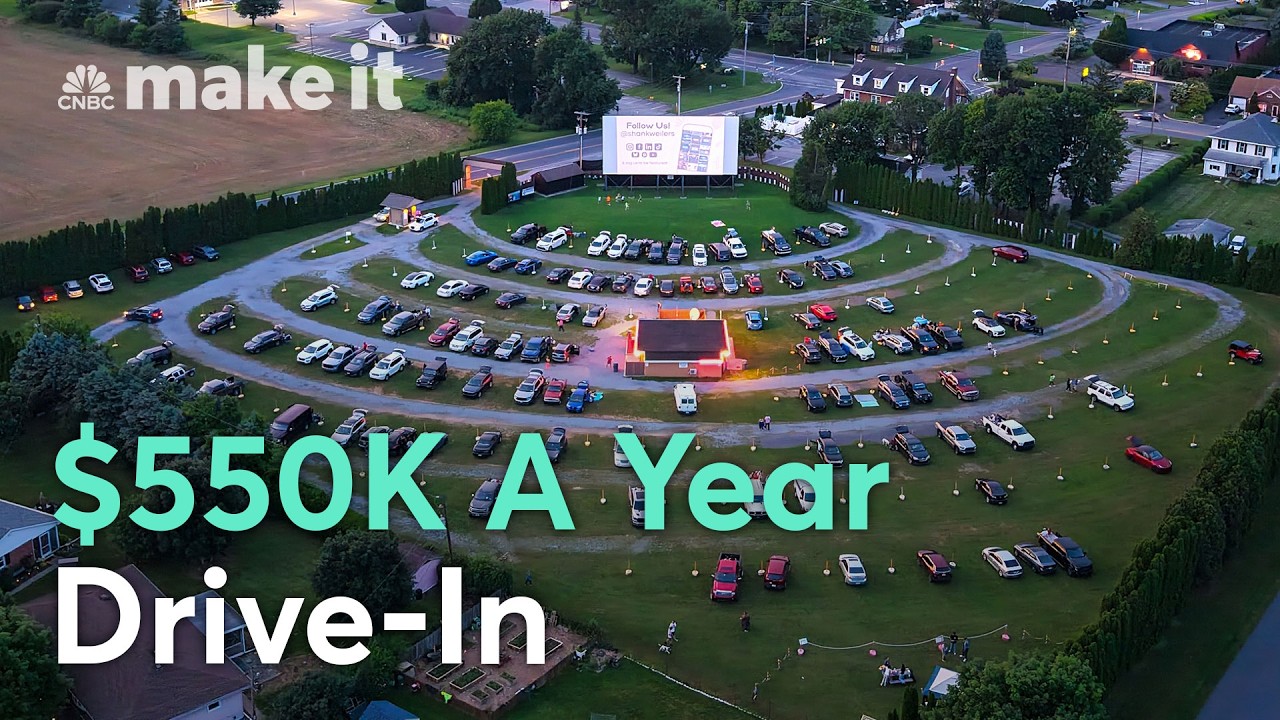
To me, it looks like a cool place to visit, but also feels like a very hard way of making some cash... A million in debt, 500K a year in revenue, most of which going linea recta to the studios... taking home only $35K each... running on an aging projector, with apparently little to no budget to replace it when it goes awry. I certainly hope they make it work though.Leave a comment:
-
Also, I've lived with cats for most of my life (though admittedly, never a Burmese) and can never remember one wanting to lie stretched out on his or her back like that. On their sides and stomach, all the time; so I'm not that surprised that Apple's AI algorithm thought that there was something weird about that photo.
image.png
"WTF? I thought that only happened to Teslas!"Last edited by Leo Enticknap; 06-09-2026, 06:27 PM.Leave a comment:
-
I've read before that machine vision/facial recognition/etc is less accurate with images of people with dark coloured skin.
Apparently that extends to cats as well.Leave a comment:
-
Source
image.pngI got an explicit content warning about a photo of my... cat
Apple’s prudish iPhone filters impressed me, but it’s going to take a lot more to protect our children from indecent images
Celia Walden
“This could be sensitive,” the alert on my iPhone warned. “Are you sure you want to view?”
I don’t think I’ve ever been so excited in all my life. It’s tea-time on a random Wednesday, and someone is sending me a photo so scandalous it has triggered a “sensitive content” warning. The first I’ve ever received, no less. Obviously, the answer was always going to be, “Yes! A thousand times, yes!”
But Apple’s “sensitive content warning” – a function that came with the release of iOS 17 in 2023, and that can be enabled (or disabled) – still needs to take me through a few more safety steps before I can view whatever this is.
“Naked photos and videos show the private body parts that are usually covered by underwear or bathing suits,” the alert informs me. I’m glad we’ve cleared that up – it’s something I’ve long wondered about. But there’s more. “It’s not your fault,” I’m assured, “but it can potentially be used to hurt you.”
The warning continues: “The person in this might not want it seen – it could have been shared without permission.” It’s all getting quite dark now, and my finger is inching towards “Ways to get help”, but the curiosity is too strong, so instead I tap, “I’m sure”.
The image that greets me is graphic, I’m not going to lie. Pornographic, some might say. There are nipples, for one thing. An alarming number of them. And the body is hirsute, stretched out shamelessly, sensuously, for all to see. Only these are not human body parts I’m staring at wide-eyed, but those of my Burmese cat, Dennis, who is lying prostrate on his back in a ray of sunshine. As for the messenger, this is not some predatory male – but our 72-year-old cat-sitter.
I was impressed, I have to admit. Not just by my cat’s shapely body parts, but by Apple’s technology. Because yes, on this occasion it was a cat, but the image was distinctly scandalous, and how was it able to pick up on that?
As the mother of a 14-year-old in 2026, I have to imagine the unimaginable. Every front page on Monday announced a crackdown from Sir Keir Starmer on children’s access to social media. There was a warning to tech companies operating in the UK, too – introduce device controls that prevent children from sending and receiving explicit images within three months or face punishment.
And how we’ve gone this long without putting the squeeze on those companies is truly scandalous. But if Sir Keir can just get this one thing over the line while he’s still Prime Minister, every parent I know would forgive him a lot.
image.pngLeave a comment:
-
For a great movie on hot metal typesetting, see Linotype The Film.
When I was in college, the school (note the spelling) radio station was in the graphic arts building. The school newspaper type was set on a Linotype. They'd then pull a proof from the Linotype output, do a pasteup, photograph the pasteup, then burn plates for their web offset press. Quite an operation! They had a couple new phototypesetting machines. One had a rotating drum with all the characters on photographic film. When the correct character came around, a strobe would flash putting the image on another sheet of film which was then moved to the next character position. Another one used a sheet of film with a square array of characters. Mirrors would flip back and forth to send the proper character image to the film.
Downstairs in the GA building was the Shakespeare Press Museum. It had old presses and old sets of hand set type. A friend pulled proofs of those sets of type so they could be used on the new phototypesetting machines. From this article, it looks like he's doing that once again, but now for electronic typesetting. I used to work on the machines he used to punch paper tape to drive his typesetting equipment at Tintype Graphic Arts.
Leave a comment:
-
Just be happy they're not from Netflix, or they'd all be in different aspect ratios.
When I was still mainly running film, well into the late 80's, it wasn't unusual for
35mm prints to show up in cans embossed with the names of studios that had
long been outta business or out of 35mm distribution. [ Monogram, Republic,
PRC, etc) I remember taking pictures of some of them.
The other thing that I remember getting once or twice 5 Reel metal ICC
shipping cases. They didn't make many of them because back when the
projection unions were strong, they didn't allow projectionists to carry a
5 reel case. (Or, in the union I was in at the time, I wasn't supposed to
carry any shipping cases up a flight of stairs) Of course, in later years, the
distributors started using those fiber-paper (or whatever they were) which
often held 6 reels. But by then, the unions weren't in as strong a position to
object, having been kicked out of most venues.
Leave a comment:
-
Example:The ability to fill in missing letters or words in text is primarily driven by contextual guessing and top-down processing, where the brain uses surrounding context and prior knowledge to infer meaning from incomplete information. This phenomenon is also known as typoglycemia, which allows readers to comprehend words even when intermediate letters are scrambled or missing, provided the first and last letters remain in place.
Source: https://observer.com/2017/03/chunkin...e-information/Aoccdrnig to a rscheearch at Cmabrigde Uinervtisy, it deosn’t mttaer in waht oredr the ltteers in a wrod are, the olny iprmoetnt tihng is taht the frist and lsat ltteer be at the rghit pclae. The rset can be a toatl mses and you can sitll raed it wouthit porbelm. Tihs is bcuseae the huamn mnid deos not raed ervey lteter by istlef, but the wrod as a wlohe.
Leave a comment:
-
In the days of hot metal typesetting, there was a centuries old tradition in the British newspaper industry whereby if the printworkers' union was unhappy about something, but the discontent hadn't gotten as far as a full blown strike (yet), embarrassing typos would be deliberately introduced into the text. This happened so frequently in The Guardian in the 1970s that it became nicknamed The Grauniad (an anagram of guardian). One of my favorites from my teenage years in the '80s was a review of a Royal Opera House production of Verdi's Aids (this was around the time that the disease was becoming a major news story).
It appeared that desktop publishing killed that tradition off, but then came the Quality Learing Center, and now this...Leave a comment:
-
Now that this spelling is in print, dictionaries will just have to catch up.Leave a comment:
-
Whoever printed the yearbooks for the 2026 graduating class at Johnston High School
in Rhode Island, USA, should have stayed in shool! It's unlikely new books can be printed
by graduation day. (My suggestion would be to simply pry the letter "C" off of the name
on the front of the high-school building) Some of the students are pretty upset, but, hey
kids- - in 50years you'll look back on this and laugh, and you'll have a unique collectors item.
(I'd only be upset if they had misspelled MY name in my HS yearbook)
BadYearbook.jpg
There! - I Fixed It!
This would probably be faster, easier, and cheaper than re-printing all the yearbooks
BadSchool2.jpgLast edited by Jim Cassedy; 06-08-2026, 10:08 AM.Leave a comment:
-
Leave a comment:



Leave a comment: