|
|
This topic comprises 6 pages: 1 2 3 4 5 6
|
|
Author
|
Topic: Could 35mm ever return to mainstream cinemas?
|
|
|
Frank Angel
Film God

Posts: 5305
From: Brooklyn NY USA
Registered: Dec 1999
|
 posted 05-25-2018 01:41 PM


If the 35mm film format were a strong economic advantage for exhibitors, the big chains would have vigorously fought to keep it. They certainly had the power to demand that the studios keep it. As in, "We only have equipment to run film...it's bought and paid for, and if you want your picture to play on our screen, give us film prints to play in our film projectors or see how well you do having no place to show it. See how well you do selling it to TV."
Quite obviously the big chains saw an substantial economic advantage to scrapping their existing equipment and investing huge sums of money in digital; that has to tell you something; even when it was in its questionable infancy (remember the first digital projectors that quickly became fancy planters or door stops?), and some got burned with that first roll-out debacle, they still shelled out investment money. They saw the economic advantage of not paying shipping costs and eliminating projectionists, a salary was a major operational cost for them. Plus, let's face it, by the time digital was making a breakthrough, film presentation quality had hit a very low bar. Just read bad presentation thread there that goes on for miles and miles.
So if the chains who could have gone toe-to-toe with the studios if 35mm were something that was really essential to their business model, they could have insisted on it. They didn't. And they certainly won't ever again.
| IP: Logged
|
|
|
|
|
|
|
|
|
|
Bobby Henderson
"Ask me about Trajan."

Posts: 10973
From: Lawton, OK, USA
Registered: Apr 2001
|
posted 05-25-2018 10:45 PM
quote: Cobi Fox
This is something I've been wondering about lately. I guess one possibility could be that theaters could get tired of upgrading D-Cinema formats and having security loopholes patched, so they may choose to replace D-Cinema with 35mm due to it being a more stable format. Obviously this is unlikely, but it would be neat. What are your thoughts? Could 35mm ever return in any way?
Just to answer the original post directly, far too much has been lost for any film-based projection to make a return to widespread use. Others have mentioned all the lost infrastructure for making film prints. The skills base for showing film prints in theaters has dwindled down to a minimal level. Lots of experienced film handlers in theaters and others throughout the print production chain have changed jobs or even passed away. I'm not sure how perishable the skills are in film handling, but it would seem that at least some practice is necessary.
If anyone thinks mainstream movie theaters were doing a terrible job with film prints 15-20 years ago they should brace themselves for the disasters that would happen now in the typical neighborhood multiplex if some movie production tried to stick hundreds of 35mm film shows into a wide release.
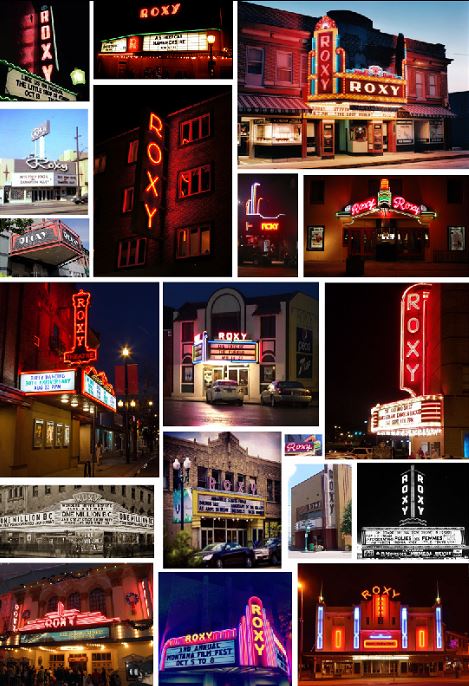
The situation makes me think of other things that seem to be dying. Just like film in the movie industry, neon in the sign industry is kind of trying to make a resurgence, at least in certain trendy big city night-life areas and a few other busy commercial districts. But overall, neon use in signs is dying out and I think it's a damned shame. Some of the coolest looking signs I've ever seen were seriously decked out in neon.
The number of experienced neon tube benders is dropping rapidly -a lot of these guys are getting old, retiring (or dying). The tube bender at our sign company is going to retire in a couple years. We rarely sell any new signs with neon in them anymore. The only application now for neon is signs where the neon glass is directly visible, such as open faced channel letters or border lighting that follows unusual curves or shapes. LEDs have replaced neon everywhere else. LED systems are now even replacing a lot of the high output fluorescent lamps in traditional cabinet signs. Various companies are trying to market flexible LED "rope" products to imitate exposed neon, but that stuff is cheesy as hell and it can't do tight bends and complex curves as well as neon.
These days most of our tube bender's neon work is just repair work for existing signs. People still love the look of neon. Nothing else can successfully imitate it. Unfortunately customers don't love the price of neon and its potential maintenance costs. Repair work can be frequent when you live in tornado alley where signs can be pummeled by hail. Making matters worse, some of the products for neon have dropped in quality. We've had headaches lately with neon-specific transformers and other components. They're just not made as well as they were a few years ago (even when carrying UL approved labels). Falling product quality leads to more maintenance issues and frustrated customers.
Topping it off, more and more communities are drafting very restrictive sign ordinances, some of which ban the use of neon outright. I'm seeing more and more commercial districts that look more like a residential neighborhood or school campus. The streets are lined with so many bushes and trees you can barely see the damned store you're trying to find. And if there are any street signs allowed they're about the size of a fucking tombstone, which might be apropos considering the brick and mortar retail apocalypse that has been unfolding. Can't find the store? Just go home and order what you were going to buy from Amazon!
quote: Aaron Garman
70mm is in a way kinda back, but not 35mm. It could still be used for smaller, boutique cinematheques but not the local Cinemark or AMC.
In a way 70mm is a victim of its own recent success. Some movies that want to put "70MM" on the marquee (or at least on the theater's web site or Fandango) aren't going about it the right way. For instance, shooting a movie on 5/65mm film yet post-producing it digitally at 4K resolution and then laser recording it back to a few 70mm prints is kind of insulting to people who appreciate real 70mm productions. I would have less of a problem with this crap if the posting work was done at a higher resolution level, such as 8K and at deeper color bit depths. Unfortunately the bean counters aren't going to go for rendering all those extra pixels if they're only going to show up on a few 70mm film prints and nowhere else. So, in the end, why even bother with 70mm in the first place?
quote: Marcel Birgelen
The industry should focus on 4K and getting the grey out of the picture in the next iteration of digital and boost the contrast in general. Then I'd say we've got everything back that we lost with 35mm, besides some grains of nostalgia.
D-cinema's version of 'scope still sucks ass. It's just like watching a letter-boxed movie on TV at home. Anamorphic 'scope is at least one category where a 35mm print can potentially beat a DCP. But! That's only going to happen if the movie's post production process is all film-based or has a digital intermediate specifically tailored for what a 4-perf 35mm anamorphic print can deliver. If a 35mm 'scope print is sourced from the same kind Digital TechniScope master used for the letter-boxed DCPs then any advantage the 35mm print could have had is lost.
Perhaps the 'scope format could do better IF the LED "jumbotron" style screens start taking over theaters. It's already possible to build a huge LED screen with a very wide aspect ratio. You could even configure one with a deep curve and be able to show the image with PERFECT geometry. Theaters would have to tailor their auditorium designs to these wider screens. Right now the trend just seems to be making screens taller, not wider. Movie studios would have to do their part in production and post production. Currently the studios seem fixated on making letter-boxed "scope" movies for HDTV screens at home. That latter part there worries me about the future of commercial movie theaters. Lots of younger people may still be paying to see movies in theaters. But there's no loyalty to the cinema at all. So many people have these modded Fire sticks and Kodi boxes that I wonder how the business model for cable TV in general is still hanging on, never mind the issues facing the movie industry.
Times are changing.
| IP: Logged
|
|
|
|
|
|
|
|
|
|
|
|
|
|
|
|
Bobby Henderson
"Ask me about Trajan."
Posts: 10973
From: Lawton, OK, USA
Registered: Apr 2001
|
posted 05-28-2018 03:45 PM
As it is the film vs digital thing is pretty much a moot point now. The real trick over the next 20 years will be keeping the commercial movie theater business model viable. I'm worried about a few trends.
I previously mentioned all the mass piracy taking place (Fire sticks, kodi boxes, etc). There's a lot of people, particularly in younger age groups, that really don't care how or where they watch a movie. If there is a free option they'll take that free option even if the image and sound are crap (and they're watching it on a smart phone).
LED-based "jumbotron" screens do have a lot of potential. But I think new board designs which allow sound to pass through are a must. Cost per pixel has to drop too. One of these boards in 4K resolution would probably be even more expensive than a high end, dual projector laser setup. These LED boards have no chance of going mainstream, being installed in common neighborhood multiplex theaters, until numerous improvements and cost reductions happen.
Then there's the issue of real estate. The theatrical side of the movie industry depends on movies getting advance buzz before they open. World premiere events are really just a big marketing thing. New York City has lost most of its best premiere-class theaters. Movie theaters, night clubs and other fun places are being closed and demolished to make way for luxury condos and other boring crap like that. Los Angeles has lost a number of its better venues too. How it will play in marketing terms if a New York world premiere of a movie has to be held out at a garden variety multiplex in Paramus, New Jersey?
The sad thing is when enough pieces of which build up what we think of as the movie industry are gone many of us won't even care by that point if/when the whole movie industry goes over the brink into oblivion. So much of the movie industry is really only a TV industry anymore. Book stores, music stores and video rental stores are rapidly vanishing. Does anyone really think movie theaters are immune to the same trends?
quote: Justin Hamaker
My theatre still has neon, but the problem is the nearest neon shop is something like 3 hours away. Any time we need repairs or maintenance it becomes a major deal. As a result we don't usually schedule a repair until we need more than just one thing fixed.
As the skills base of neon workers continues to age it's going to get harder to get neon repair work done. Deferred maintenance is common unless a local shop can get the work done promptly (and not for too much money). A neon sign with bad or broken glass units (or a bad transformer) that remains un-fixed is going to be a turn-off for other business people considering buying a neon sign.
quote: Justin Hamaker
Wouldn't a full frame image and an anamorphic lens resolve some of the issues. At least this way the picture is receiving the full 2048x1080 worth of light.
I've mentioned that very thing here in other discussion threads. A d-cinema projector with a 1.25x anamorphic decompression lens could throw a significnatly higher resolution image onto the screen. For the 2K standard the usual 2048x858 letter-boxd thing that passes for 2K scope on DCPs would be ditched. The whole image sensor would be used instead. The image would be sourced from a 2560x1080 master and would be re-sampled/squeezed to fit the 2048x1080 sensor.
2560x1080 is a standard imaging format; there's lots of computer monitors available in that setting. Scaling the method to 5K/4K anamorphic could work. There are numerous d-cinema camera systems equal to or higher than a 5120 pixel width, which is what it would take to squeeze a 1.25x anamorphic image onto a 4096 pixel wide image sensor. Red's new 5K Gemini camera shoots a 5120 pixel wide image (in 2700 or 3000 pixel high image heights). Red's other DSMC2 models have 8K resolution (the Monstro has a VistaVision sized sensor).
This anamorphic approach probably won't happen any time soon, if ever. In post production it's cheaper to render, store and distribute a 2048x858 image than a larger 2560x1080 image. In movie theaters everyone seems to prefer the projector having only one single, spherical zoom lens. That translates viewers being stuck with "digital TechniScope," which is a more fancy way of saying it's TV-style letter-box 'scope.
quote: Randy Stankey
There are three levels or classes that are used when electronics are manufactured.
Class 1: General. Consumer goods.
Class 2: Industrial. Mission-critical.
Class 3: Military/Medical. Life-Safety. Critical.
How do computer chips figure in to this standard? I can understand integrated circuits, capacitors and other components like that being made to varying standards. These d-cinema projectors use quite a few different kinds of computer chips, some of which may be used in consumer level computer gear. Personal computer style components don't have dependable life spans beyond 7-10 years and those components aren't produced new for any more than 3-5 years. Any computer-based stuff that has a part fail after the 10 year life span mark can easily turn into a door stop unless a working replacement part can be found (and successfully installed).
| IP: Logged
|
|
|
|
All times are Central (GMT -6:00)
|
This topic comprises 6 pages: 1 2 3 4 5 6
|
Powered by Infopop Corporation
UBB.classicTM
6.3.1.2
The Film-Tech Forums are designed for various members related to the cinema industry to express their opinions, viewpoints and testimonials on various products, services and events based upon speculation, personal knowledge and factual information through use, therefore all views represented here allow no liability upon the publishers of this web site and the owners of said views assume no liability for any ill will resulting from these postings. The posts made here are for educational as well as entertainment purposes and as such anyone viewing this portion of the website must accept these views as statements of the author of that opinion
and agrees to release the authors from any and all liability.
|

 Home
Home



![[Wink]](wink.gif)








 Printer-friendly view of this topic