|
|
 
|
|
Author
|
Topic: Real D & Dolby 3-D - What is the difference?
|
|
|
|
|
|
|
|
|
|
|
|
|
|
|
|
|
|
|
|
|
|
|
|
|
|
|
Julio Roberto
Jedi Master Film Handler
Posts: 938
From: Madrid, Madrid, Spain
Registered: Oct 2008
|
 posted 04-15-2009 07:47 AM


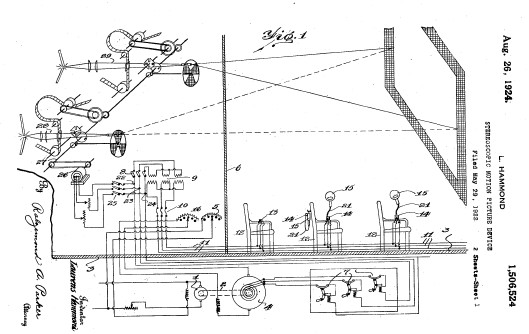
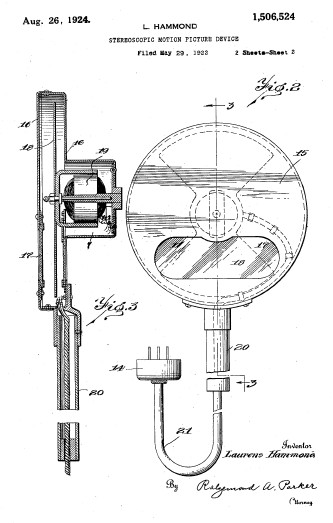
Yeah, that system was used a couple of times. The theater had it mounted on a flexible arm so that audiences could position it to their liking and not have to hand-hold it ![[Smile]](smile.gif)
It was short lived, of course. Mostly experimental.
Today the equivalent to that system is the XpanD shutter glasses. Same principle. It can be used with just one projector, there is no polarizing optics (in the projector) and the glasses act like an alternating shutter.
Because the glasses use liquid crystals to perform the shutter action, the glasses do polarize the light upon entry. But this is a by-product of the technology used, not a requirement.
The screen, of course, doesn't need to be silver or anything.
The glasses and projector synchonize the shutter action with a signal broadcasted into the auditorium (usually an infrared signal) instead of a wire. Such are the advances of modern technology ![[Big Grin]](biggrin.gif)
At home, some ancient videogame system in the 80's used a similar concept to quickly rotate a color wheel in front of the eyes and provide a color-sequential system from the black and white display. On top of sequential color, it offered sequential 3D!!!
http://en.wikipedia.org/wiki/Vectrex
[link is to wikipedia article on the 80's home videogame system Vectrex, which used a rotating wheel peripheral to produce 3D and color effects]
quote:
The 3-D imager spins a disk which is half black and half colored bands that radiate from the centre (usually red, green and blue) between the viewer's eyes and the vectrex screen. The Vectrex is synchronized to the rotation of the disk (or vice versa) and draws vectors corresponding to a particular color and/or a particular eye. Therefore only one eye will see the vectrex screen and its associated images (or color) at any one time while the other will see nothing.
A single object that does not lie on the plane of the monitor (i.e., in front of or into the monitor) is drawn at least twice to provide information for each eye. The distance between the duplicate images and whether the right eye image or the left eye image is drawn first will determine where the object will appear to "be" in 3-D space. The 3-D illusion is also enhanced by adjusting the brightness of the object (dimming objects in the background). Spinning the disk at a high enough speed will fool the viewer's eyes/brain into thinking that the multiple images it is seeing are two different views of the same object. This creates the impression of 3-D and color.
As you can see from that 1922 patent, and other prior ones, human kind has been researching and developing 3D imaging solutions for over 100 years now. It was actually in 1922 when the first feature motion picture was made (Power of love).
As you know, the first 3D footage was shot about a week after the first camera itself was invented ![[Wink]](wink.gif)
| IP: Logged
|
|
|
|
|
|
All times are Central (GMT -6:00)
|
This topic comprises 11 pages: 1 2 3 ... 7 8 9 10 11
|
Powered by Infopop Corporation
UBB.classicTM
6.3.1.2
The Film-Tech Forums are designed for various members related to the cinema industry to express their opinions, viewpoints and testimonials on various products, services and events based upon speculation, personal knowledge and factual information through use, therefore all views represented here allow no liability upon the publishers of this web site and the owners of said views assume no liability for any ill will resulting from these postings. The posts made here are for educational as well as entertainment purposes and as such anyone viewing this portion of the website must accept these views as statements of the author of that opinion
and agrees to release the authors from any and all liability.
|

 Home
Home













 Printer-friendly view of this topic