|
|
 
|
|
Author
|
Topic: Gas Prices in your area
|
|
|
|
|
|
|
|
|
Randy Stankey
Film God

Posts: 6539
From: Erie, Pennsylvania
Registered: Jun 99
|
 posted 08-16-2005 11:23 PM


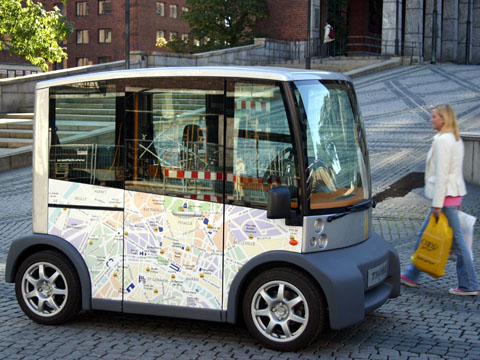
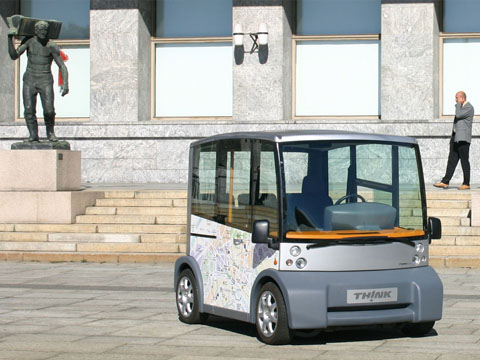
I think the idea of a public car is a good one, provided some kinks can be worked out.
It'd have to be paid for by a combination of government (tax) and private (invested) money. It'd probably have to be run by a non-profit organization and it'd be ESSENTIAL that the organization's mission is stated so that ALL profits above operating expenses and salaries be plowed back into the operation. (Back into its endowment?)
It could only be an organization such as this which can afford to buy dozens of these cars, deploy, and maintian them.
I can't imagine they'd be useful anywhere but central cities and shopping districts. Though they can only go 30 MPH there needs to be a repair crew in range of these things at all times. If one gets stuck, breaks down or runs out of gas/batteries nobody wants to tow these things miles and miles back to the central station. Vehicle safety in the central city, although important, isn't as critical as on the freeways. (They'd be prohibited on freeways anyhow... Minimum speed limits.)
As for deployment, think of them as something that's half way between a subway system and a self-driven taxi. They are deployed around subway stations and parking garages. The user goes into the special lot, picks up a key from the attendant, checks out the car and drives off. You don't have to wait for the next train to come. You don't have to stand around on piss-scented underground platforms. You don't have to put up with surly cab drivers whose names you can't pronnounce and who speak three words of English.
I'd imagine payment would be by a ticket or a pass system. Users could buy a one-time ticket or a pass for the whole day/month. Once the driver is credentialed and payed up it's just a matter of checking in at the depot and picking up the keys.
Sure, there are a lot of pain in the ass issues to work out but the benefits, potentially, could be huge. A fleet of vehicles is more efficient than privately owned vehicles. (Most cars sit idle for the majority of the time, waiting for their owners to drive them.) Fleets can have the most efficient vehicles for the abiltiy of engineers to design and produce them.
Look at it this way: Less than 10% of the energy gained from burning gasoline goes to actually propelling the car. If the fuel efficiency of a car can be improved by only 1%, that's like putting 10% of your fuel back into the gas tank. It is in the fleet owner's best interest to have the most fuel efficient vehicles possible. (Electricity IS fuel. It's just burned at the power plant, miles and miles away.)
Also think of this: For every gallon of gas you refine you need about two gallons of crude oil. (The average 42 US gal. barrel of crude oil yeilds about 20 gallons of gas... 48%) For every gallon of gas you save, you DON'T have to import TWO gallons of oil.
So, taken to its logical conclusion, if there was a way to magically increase the average fuel mileage of every car in America by 1% we would suddenly need to import 10-20% LESS oil than we do right now! Doing that would drop prices enough that the average consumer wouldn't have to worry about whether he should buy food or fill up the tank so he can drive to work. And we could absorb the effect of those few jizm-wads who insist on driving gas hogs just because they can afford to.
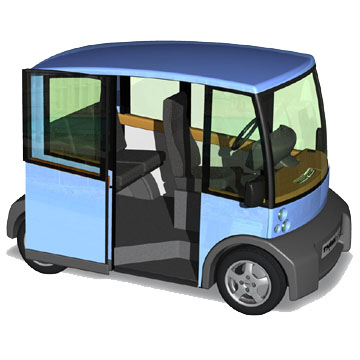
Having more fleet vehicles is a good start on achieving such a goal. The Think electric car concept, I believe is a good way to increase the number of fleet vehicles in use.
| IP: Logged
|
|
Robert Burtcher
Expert Film Handler

Posts: 194
From: Oklahoma City, Oklahoma
Registered: Jun 2005
|
posted 08-17-2005 05:01 AM
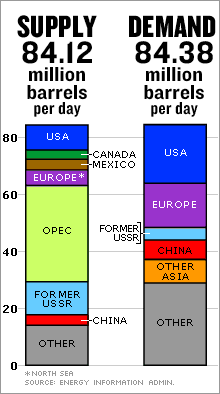
The main problem that is causing gasoline prices to skyrocket in the US actually has to do with our refining capacity. No new refineries have been built since the 1970s due to strict EPA regulations. While new technology and processes have increased production per capita, older refining facilities have been shut down due to age or destruction by fire, etc. The net result is that while our usage of petroleum fuels has increased over the past 30 years, our total refining capacity has stayed the same. This leads to a VERY tight supply and demand situation.
As well, the worldwide demand for petroleum fuels has increased, especially in developing nations. More countries are competing for the same oil, and once again, this leads to a VERY tight supply and demand situation.
We do still have it lucky here in the US... Gasoline is a lot more expensive per US Gallon in amost every other country.
And for the record:
Edmond, Oklahoma, USA: $2.479/g
| IP: Logged
|
|
|
|
|
|
|
|
|
|
|
|
|
|
|
|
|
|
|
|
|
Powered by Infopop Corporation
UBB.classicTM
6.3.1.2
The Film-Tech Forums are designed for various members related to the cinema industry to express their opinions, viewpoints and testimonials on various products, services and events based upon speculation, personal knowledge and factual information through use, therefore all views represented here allow no liability upon the publishers of this web site and the owners of said views assume no liability for any ill will resulting from these postings. The posts made here are for educational as well as entertainment purposes and as such anyone viewing this portion of the website must accept these views as statements of the author of that opinion
and agrees to release the authors from any and all liability.
|

 Home
Home











 Printer-friendly view of this topic